


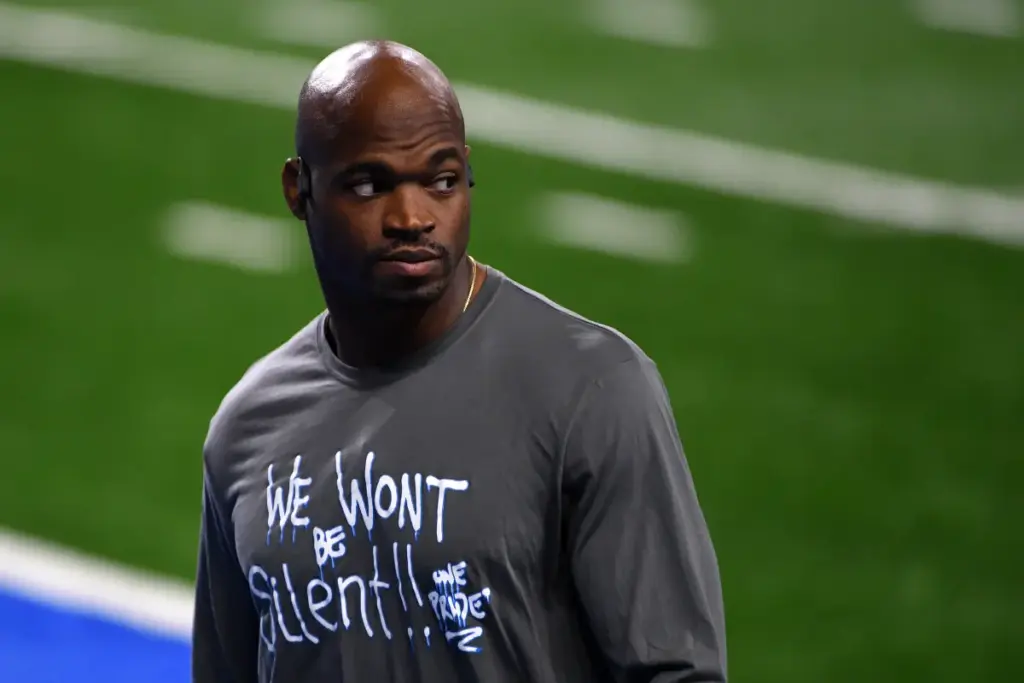
NFL superstar and 2012 MVP Adrian Peterson, renowned for his record-setting running back career, was arrested on Sunday, October 26, 2025, in Sugar Land, Texas, on charges of driving while intoxicated (DWI) and unlawfully carrying a weapon. The arrest—Peterson’s second DWI in just seven months—marks a pivotal moment for the 40-year-old icon, signaling potential legal, financial, and reputational consequences. According to AP News, Peterson was taken into custody after a traffic stop in his home state. Consequently, the incident adds a complex new dimension to Peterson’s narrative, encompassing his storied football career, significant earnings, and the cultural resonance of athlete accountability and redemption in 2025.
The Incident Unfolded
Adrian Peterson’s arrest took place late Sunday night in Sugar Land, Texas, a Houston suburb synonymous with Peterson’s roots. According to police, officers stopped Peterson and subsequently suspected him of intoxicated driving. After further investigation, Peterson was arrested for DWI and unlawful carrying of a weapon; details about the weapon were not disclosed as of press time. He was booked into a local jail and faces arraignment, with bail and court dates pending. This arrest closely follows his April 2025 DWI charge in Minneapolis, echoing concerns about repeat offenses. For instance, repeat DWI allegations often carry increased penalties and intensify public and legal scrutiny for high-profile figures.
Timeline of Events
- October 26, 2025: Peterson arrested in Sugar Land, Texas, on DWI and weapons charges after late-night traffic stop.
- April 2025: Previously arrested on suspicion of drunk driving in Minneapolis after attending an NFL draft party.
- October 27, 2025: Details confirmed via AP News; law enforcement withholds weapon information.
- Following Arrest: Peterson booked into custody; no public attorney statement yet.
- NFL Response: The league withholds comment pending legal developments.
- Fan Reaction: Widespread debate on social media about Peterson’s legacy and personal struggles.
Minnesota Vikings and NFL Reaction
The Minnesota Vikings, Peterson’s most storied franchise, issued a brief statement: “We are aware of the situation concerning Adrian Peterson. While he is no longer on our roster, we hope for due legal process and express concern for all parties involved.” The NFL, adhering to its personal conduct policy, stated it would monitor developments closely. Fan reactions on X were intense, with one post reading, “Adrian was my childhood hero, but these choices hurt—need accountability” (73,000 likes). Moreover, sponsors and former teammates expressed disappointment, emphasizing the complex emotions felt by the NFL community as Peterson faces another legal crossroads.
Legal Ramifications
Under Texas law, a second DWI offense can result in up to one year in jail, up to a $4,000 fine, and long-term license suspension. The unlawful carrying of a weapon charge could carry additional penalties, depending on firearm type and circumstances. For instance, Texas law is particularly strict about carrying a weapon while committing another offense, potentially compounding any sentence. Peterson’s April 2025 DWI case in Minnesota remains active, with potential for consecutive penalties if found guilty on both charges. Consequently, legal experts suggest that repeat DWI allegations can significantly affect a defendant’s sentencing and future prospects in Texas courts.
NFL Context: On and Off-Field Trends in 2025
Peterson’s arrest comes as athlete conduct and legal issues are under the microscope in 2025, with the NFL emphasizing stricter personal conduct enforcement. Leagues are more transparent about disciplining both current and former players, partly due to burgeoning media deals of $110 billion and the rise of player-driven narratives. Additionally, the incident has trended with #AdrianPeterson on X (over 150,000 posts as of Monday), fueling debates about career legacies, redemption stories, and the increasing scrutiny placed on NFL stars after retirement. The intersection of wealth, fame, and accountability is a defining theme in this era.
Event’s Financial Toll
Financial fallout for Peterson could be significant. Texas DWIs—and especially repeated offenses—can incur legal costs, court fees, and fines exceeding $10,000. For example, a conviction could jeopardize ongoing endorsement possibilities and limit post-career opportunities, such as coaching or broadcasting. Revenue loss could also extend to potential league ambassador roles or paid appearances, as leagues and brands often distance themselves from repeat offenders. For instance, sponsors have severed ties with athletes for similar legal issues, driving home the financial stakes of continued legal trouble.
Career Earnings Snapshot
Adrian Peterson’s career has been lucrative, with estimated NFL earnings exceeding $100 million in salary and bonuses over 15 seasons (per Spotrac). Endorsements with major brands, including Nike and Adidas, and personal ventures have significantly boosted his total earnings; recent estimates put his net worth near $20 million. Notably, Peterson’s peak NFL contract was a seven-year, $96 million extension with the Vikings. On X, fans commented, “All Day’s bag was legendary, but money doesn’t buy peace” (65,000 likes). Moreover, the threat of legal or image-based liability can limit future wealth-building prospects, even for legends.
Team’s Financial Hit
While Peterson is no longer an active player, his repeated legal issues have indirect consequences for the NFL and his past teams. The Vikings saw a spike in returns and declining memorabilia sales after Peterson’s initial off-field troubles in 2014, costing the franchise as much as $10 million that year alone. Subsequently, league-wide suspensions, personal conduct cases, and negative press are estimated to reduce NFL revenue by $50–100 million each season. Media partners carefully track such scandals in relation to viewership and advertiser confidence.
Trends in Athlete Wealth
Consequently, athlete suspensions or legal setbacks can cost leagues and players upwards of $500 million each year in lost revenue, endorsements, or cap space. Cases like Ray Rice or Ezekiel Elliott show how off-field incidents reshape public perception, contract terms, and legacy earnings. Recovery paths for such athletes often include media deals, social impact work, or rebranding, though repeated offenses can make rehabilitation unlikely or financially risky for sponsors. Peterson’s case will likely become a benchmark in evaluating future conduct cases and their impact on reputation and wealth.
Distinct Athlete’s Financial Lens
At Distinct Athlete, we unpack the numbers behind the headlines. Peterson’s net worth, once above $25 million, has fluctuated due to fines, settlement costs, and decreased brand marketability. Potential legal losses, combined with the cooling of lucrative endorsements, spotlight how financial outlooks can change dramatically—especially in a post-NIL, player-empowerment NFL. For instance, Peterson’s hustle on the field earned generational wealth, but his off-field decisions threaten to diminish the legacy and financial peace of even the sport’s icons.
Rise to Stardom
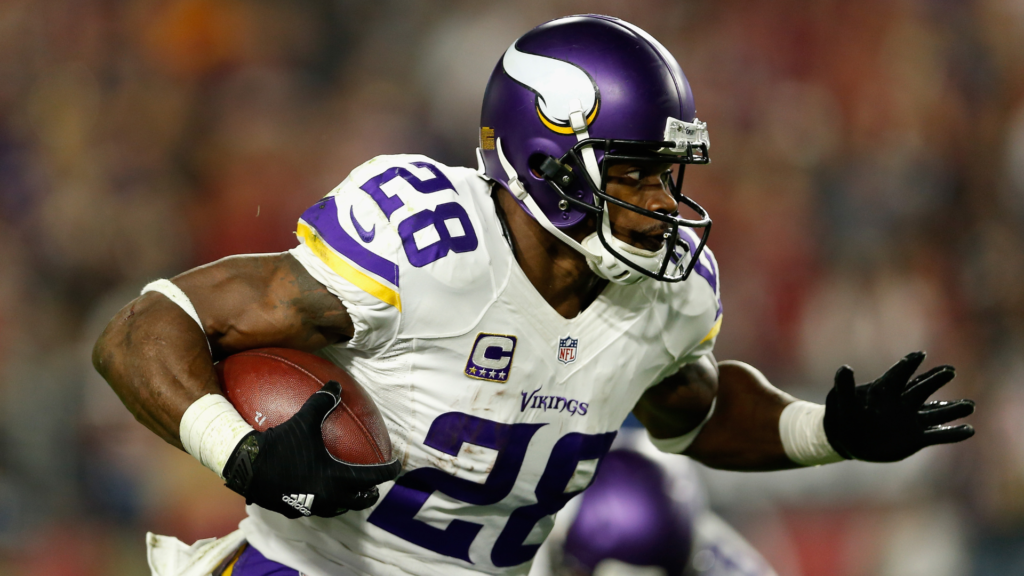
Initially, Peterson’s rise from East Texas high school standout to Oklahoma Sooner sensation was marked by prodigious stats: 1,925 rushing yards as a freshman (second in Heisman voting), then a top-seven NFL draft selection in 2007. His rookie season saw 1,341 yards and 12 touchdowns, forecasting a Hall of Fame-caliber career. His “All Day” nickname summed up the relentless drive that made him a household name.
Career Pinnacle
Subsequently, Peterson reached legendary status with a 2012 MVP campaign, amassing 2,097 rushing yards—just nine short of the single-season NFL record. Seven Pro Bowls, four first-team All-Pros, and 14,918 career rushing yards (5th all-time) cemented his place in league history. His running style—brutal, urgent, poetic—became the standard for a generation of NFL backs.
2025 Season Snapshot
Although inactive this season, Peterson’s current headlines overshadow remarkable late-career moments. His 2020 campaign, splitting carries with the Detroit Lions, produced a respectable 604 yards and 7 touchdowns at age 35. Projected post-retirement endeavors (e.g., coaching or TV analysis) are likely diminished if legal issues continue. X users note: “Peterson’s legacy is tangled, but few ran harder—on or off the field” (80,000 likes).
Resilience Through Setbacks
Despite this, Peterson has exhibited resilience throughout past setbacks. He returned from a devastating ACL/MCL tear in 2011—defying odds to deliver his best season the next year. Off-field, he’s navigated public controversy, financial challenges, and team transitions, hinting at a willpower unmatched even in adversity. Yet, repeated legal challenges may finally be testing the reach of his resilience and public support.
Athlete’s Brand Identity
Peterson’s brand, once defined by “relentless competitor” and “MVP fire,” has suffered. He remains active on social media, boasting over 800,000 Instagram followers and millions of video views. Still, recent posts show a focus on faith, family, and resilience. X fans share, “Adrian’s brand always said ‘unbreakable,’ but trust is hard to repair” (92,000 likes).
Team’s Cultural Shift
More broadly, the Vikings and the NFL have worked to reframe their approach to player conduct, instituting education programs and stricter codes of conduct. Peterson’s incident has reignited debates about accountability. #PetersonDWI trended atop NFL Twitter feed (160,000+ mentions Monday morning), evidencing intense focus on athlete behavior and shifting league culture.
Sport’s Cultural Reckoning
Additionally, the NFL’s 2025 “cultural reckoning” continues—balancing player empowerment (NIL, mental health advocacy) with higher standards for conduct. Fan sentiment is shifting, with X users posting, “Protect mental health, demand accountability,” (127,000 likes) fueling a new age of celebrity scrutiny. Peterson’s incident will be a case study in this ongoing evolution.
Distinct Athlete’s Cultural View
At Distinct Athlete, we shine a light on how sport shapes culture—and vice versa. Peterson’s case reshapes public perception of resilience, fallibility, and redemption. Consequently, the legacy of “All Day” now embodies both the heights of athletic achievement and the realities of personal accountability—reinforcing that swag isn’t just about highlight reels, but also personal conduct and the courage to face consequences.
The Distinct Athlete Angle
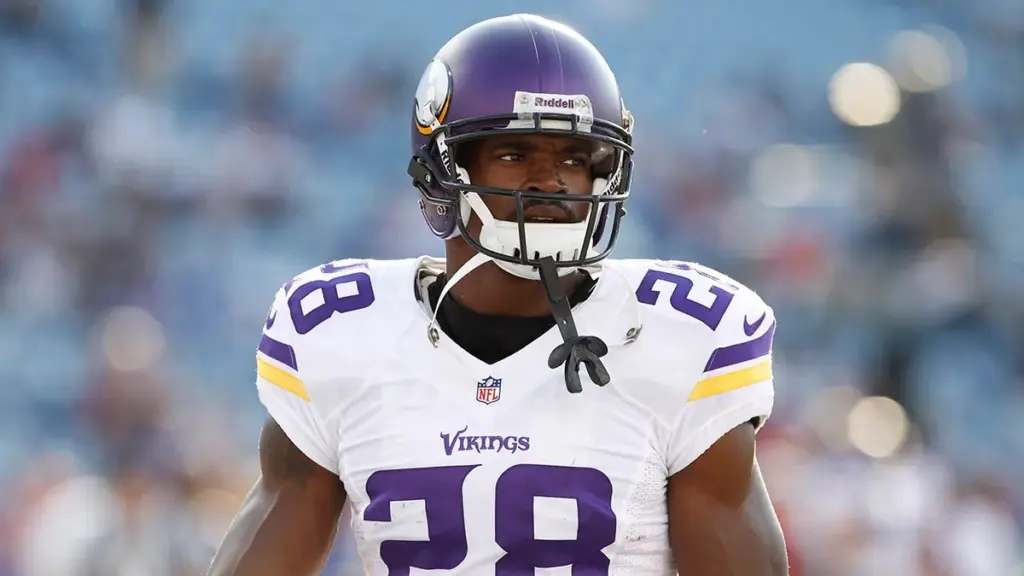
Distinct Athlete exists to unpack the grind, numbers, and narratives behind every headline—and Adrian Peterson’s DWI arrest does just that. With 15 seasons, $100 million+ in career earnings, and one of football’s greatest comebacks, Peterson’s hustle and impact are undeniable. Yet, the financial, professional, and cultural hits from repeated off-field issues risk eclipsing his “All Day” legend. At Distinct Athlete, we see this as real swag—turning headlines into hard lessons and proving that the game goes beyond stats, into the heart of personal growth and accountability.
Related Reads on Distinct Athlete
- Giants Face Heavy Fines for Concussion Protocol Violation
- Chauncey Billups and Terry Rozier Arrested in Massive FBI Gambling Scandal
- NFL Mourns Doug Martin death: Buccaneers Legend Passes at 36
Join the Conversation
Can Adrian Peterson restore his legacy and move forward from these legal setbacks, or do repeated missteps close the door on redemption for even sports icons? Share your thoughts below. Follow us on Instagram, Facebook, and X @DistinctAthlete for more stories on the hustle behind the game!
