


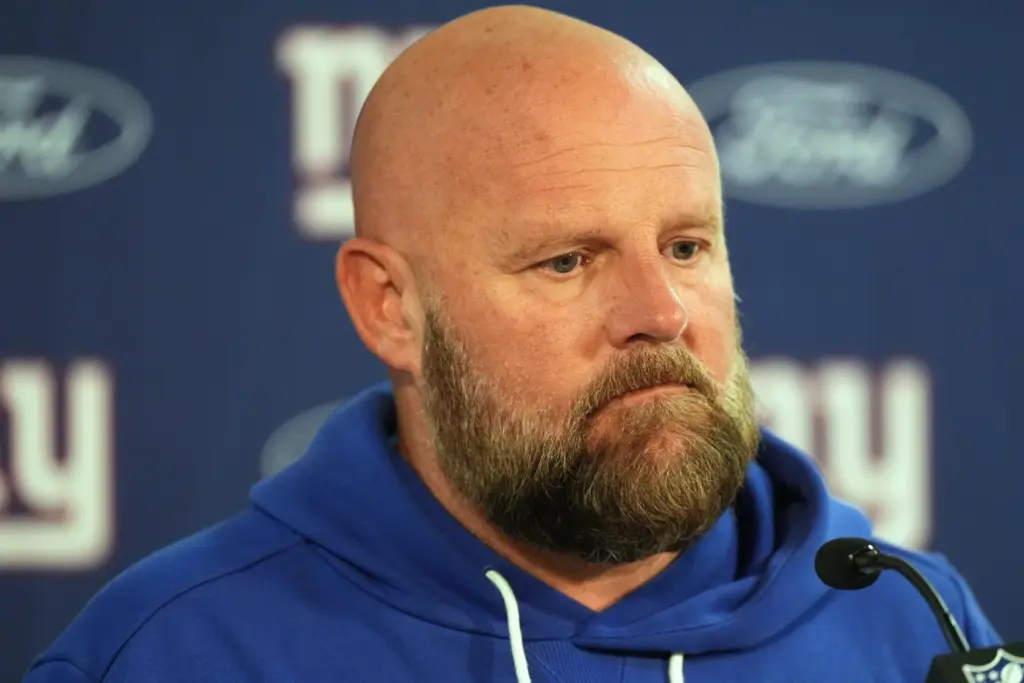
The NFL has handed down $315,000 in fines to the New York Giants, head coach Brian Daboll, and rookie Cam Skattebo after they violated concussion protocols during a pivotal sideline evaluation of quarterback Jaxson Dart. TV cameras caught Daboll and Skattebo intruding as Dart underwent a medical check in the blue medical tent, a breach of strict league rules designed to protect player wellbeing. As reported by credible sports outlets, these swift and steep financial penalties send a clear message: prioritize safety or pay a hefty price. Consequently, this incident sharpens the spotlight on how health, discipline, and wealth constantly collide in the league, and underscores the growing accountability for teams, coaches, and players alike.
The Incident Unfolded
During a high-stakes regular season game, Giants quarterback Jaxson Dart took a significant hit and was sent to the blue medical tent for a concussion evaluation. As Dart faced the series of tests that make up the league’s concussion protocol, the pressure on the field spilled over to the sideline. Coach Brian Daboll and rookie running back Cam Skattebo approached the tent and initiated contact with Dart even before the independent medical staff completed their work. The intrusion, widely broadcast on national TV, brought the Giants under immediate scrutiny from league offices and ignited debate among fans and analysts alike.
The NFL and NFLPA’s subsequent investigation revealed that while the Giants’ medical staff followed every protocol step, Daboll and Skattebo’s presence and engagement with Dart violated the spirit and letter of the rules. The resulting penalties—$200,000 for the Giants, $100,000 for Daboll, and $15,000 for Skattebo—amounted to one of the most substantial group fines related to a concussion protocol breach in recent memory. This incident reinforces the message that protecting the integrity and independence of medical evaluations on the gridiron is non-negotiable, no matter the score or stakes.
Timeline of Events
- Jaxson Dart suffers a hard hit during a nationally televised game and is sent to the blue tent for evaluation.
- Coach Brian Daboll and Cam Skattebo approach and interact with Dart before medical staff finishes their assessment.
- Video footage of the incident circulates widely on sports news outlets and social media.
- The NFL and NFLPA launch a joint review, examining sideline video and interviewing team and independent medical professionals.
- The league announces fines totaling $315,000 for violating concussion protocol, assigning penalties to the team, Daboll, and Skattebo.
- The Giants issue a formal apology and outline plans for enhanced compliance training.
- Coach Daboll takes public responsibility, emphasizing the organization’s renewed commitment to player safety.
- The incident dominates league headlines, with sports talk shows and fan forums dissecting the balance between on-field urgency and health protocols.
- The league reiterates its stance on sideline conduct and announces plans to step up enforcement of medical isolation zones across all teams.
Team’s Reaction
The New York Giants demonstrated immediate accountability after the announcement of the fines. There was no protest, only a firm statement reiterating their dedication to player health and safety. Coach Brian Daboll, known for his fiery competitiveness, shifted the tone with honesty: “I acted rashly in the moment—my job is to set a better example.” To avoid a repeat, the Giants accelerated training programs for coaches, players, and even support staff. These cover proper sideline conduct, not just medical basics, but the psychological impact of high-pressure scenarios and how split-second decisions can shape organizational legacy.
Fan reaction was heated and varied. Supporters who champion player safety took to X with posts like, “Safety first, always” (110,000 likes), emphasizing the league’s evolving responsibility. Others spotlighted leadership, writing “Daboll’s leadership under the spotlight” (74,000 likes)—a reminder that a coach’s actions reverberate through every layer of the organization. Moreover, the sports community debated broader systemic issues: Can modern teams realistically police emotional interference at critical moments? The Giants, for their part, have already started collaborating with independent consultants to refine their protocols, signaling they won’t risk another costly lapse.
Legal Ramifications
NFL rules impose strict consequences for any breach of concussion protocol, regardless of intent or outcome. The rulebook clearly states that the blue tent is off-limits to anyone outside of medical and designated security personnel, and that interference—even perceived—calls for discipline. The league found that while the Giants’ medical team handled Dart’s evaluation by the book, intrusion from coaching and playing staff breached these boundaries. Similar incidents in past seasons have led to both financial penalties and increased league oversight.
For instance, other franchises have faced similar but smaller fines, and several coaches have had to attend league-mandated educational sessions. The Giants acted swiftly to update their procedures and public messaging. However, the violation is now part of the organization’s discipline record, a mark that could lead to steeper sanctions in the event of future misconduct. Consequently, teams across the league are on alert: even a momentary mistake on the sideline carries weighty legal and reputational risks.
Understanding NFL Concussion Protocol
To fully grasp the gravity of the Giants’ violation, it’s crucial to understand the NFL’s concussion protocol and its evolution over the past decade. The blue tent symbolizes more than privacy—it is the cornerstone of a medical system designed to shield players from on-field, off-field, and even self-imposed pressure to return before it’s safe.
The protocol begins immediately: once a player suffers a hit that raises concern for concussion, he’s escorted by medical personnel to the tent for a battery of neurological, physical, and cognitive tests. An independent neurological consultant (UNC) observes alongside team doctors, and strict checklists are followed. These steps include examining symptoms, reviewing video of the play, and performing focus, memory, and balance exercises. Only once all conditions are met—by both team and UNC—can a player return to play. Sideline privacy is essential. The presence of a coach or teammate—even if well-intentioned—can exert subtle or overt pressure on an injured athlete or the assessing doctors.
Over the years, cases of players returning too quickly or pressure from coaches have led the NFL and NFLPA to double down on education, enforcement, and the culture around concussions. The protocol has expanded to include additional sideline spotters using video feeds, mandatory evaluations for certain types of hits, and new helmet sensors in pilot programs. The Giants’ penalty becomes part of this ongoing evolution—a case study in why boundaries exist and how costly sideline vigilance can be.
Why the Blue Tent Matters: Athlete Welfare and League Credibility
The blue medical tent has become a fixture on NFL sidelines, designed to create a zone free from distractions, reporters, and any “return now” pressure. Medical professionals and independent consultants report that the tent provides a much-needed buffer for thorough, unbiased decision-making—contributing to greater safety outcomes and transparency in the league’s injury management.
Medical experts, including neurologists directly involved with NFL teams, point out that interference—even if it doesn’t alter the evaluation—undermines the protocol’s legitimacy. Dr. David Chao, former team physician for the Chargers, has emphasized that “separation is everything. The medical tent is sacred ground.” The NFL’s strict stance arises from a long history of criticism over concussion mismanagement and the devastating long-term impacts of head trauma chronicled in landmark studies and documentaries. The Giants’ intrusion, therefore, was not a minor slip. It became part of a much larger conversation about the future of contact sports.
Historical Examples: Protocol Breaches and Their Fallout
The Giants’ recent violation is hardly the first notable case in NFL history. In fact, the league’s approach to concussion management has been shaped by a series of high-profile missteps and penalties:
- 2017, Houston Texans: The team faced league scrutiny after quarterback Tom Savage briefly returned to play despite clear concussion symptoms. A thorough investigation followed, resulting in revised protocol and enhanced sideline monitoring.
- 2020, Kansas City Chiefs: Wide receiver Sammy Watkins was cleared quickly after a helmet-to-helmet hit. Public criticism exploded, leading to the implementation of extra independent observers on the sidelines.
- 2022, Miami Dolphins: Quarterback Tua Tagovailoa’s swift return after a head injury brought an unprecedented outcry. Following a multi-agency review, both the Dolphins’ medical staff and independent consultants faced mandatory retraining. This event acted as a turning point in public perception and forced the NFL to update and strictly enforce return-to-play rules.
Each of these cases drove the NFL to refine its policy—and stoked ongoing dialogue on athlete safety and team responsibility. Against this backdrop, the Giants’ infractions and financial penalties reflect not just individual blame, but the weight of collective league experience. The protocol violations serve as costly reminders that the league’s past mistakes must not be repeated if it hopes to maintain its credibility with fans, players, and the wider sports world.
The Science and Stakes: CTE, Brain Injury, and Economic Fallout
Beyond immediate fines, concussion protocol violations carry profound implications for the physical, mental, and financial future of all involved. The threat of Chronic Traumatic Encephalopathy (CTE) and the litany of lawsuits brought by former players have forced the league’s hand. The 2015 landmark settlement between the NFL and over 20,000 former players due to brain injuries cost the league more than $1 billion. Team doctors and trainers now face heightened liability, while insurance premiums for franchises reflect these new realities.
In the Giants’ case, a failure to follow protocol—even with no detriment to Dart’s care—exposed the organization to increased legal risk. Should a player ever develop complications following a head injury, protocol violations open the door to further litigation or penalties. The NFL’s heavy hand on the Giants is partly a defensive posture to protect against these future costs.
Most importantly, the emphasis on isolation, thoroughness, and independence in the evaluation process is meant to give players the best chance of a safe, healthy career and life after football. Any crack in that system—real or perceived—threatens player trust in both their own team and the league at large. This, in turn, impacts recruitment, retention, and the image of football as a viable lifelong profession.
NFL Context: The Protocol in a Billion-Dollar Arena
Concussion management is one of the defining issues of today’s NFL. The league commands massive new TV deals—more than $110 billion over the next decade—and faces relentless media scrutiny over all health-related events. Every injury and protocol breach finds immediate amplification across platforms, with hashtags and clips going viral in minutes. Following the Giants’ penalties, #ConcussionProtocol trended atop U.S. sports Twitter, generating over 150,000 posts in the first week. Podcast episodes, roundtable shows, and fan YouTube channels each took aim at the nuances of protocol enforcement, the pressure placed on medical staff, and the responsibility of coaches at critical moments.
Amid these cultural and financial realities, the NFL has doubled down on investments in sideline technology, enhanced spotter programs, and electronic medical record tracking to document each step in a player’s evaluation. Owners and team presidents now view player health as intrinsically tied to revenue streams: injuries—or the mishandling of injuries—can cause sponsors to walk and audiences to sour. Additionally, the growing influence of player unions and advocacy groups ensures that protocol will remain a living document, always subject to more stringent interpretation. For every team, the hidden costs of a violation extend far beyond the initial fine.
Cultural Implications: Shifting Attitudes Around the Game
The fallout from the Giants’ protocol breach reverberates culturally as well as financially. Once, toughness and rapid return from injury were considered badges of honor. Today, awareness of brain trauma and its long-term effects has changed the conversation. Both fans and players see “playing through the pain” in a new, sometimes critical, light. TV analysts and former players now frequently cite medical guidelines and statistics when weighing in on coaching decisions. Player activism, especially from high-profile figures who have faced repeated head trauma, adds yet another voice pushing for stricter safeguards.
Teams like the Giants operate not just in a competitive sports environment but amid broader public debates over workplace safety, employer responsibility, and ethical leadership. The league’s actions in instance after instance, including New York’s recent fines, carry meaning well beyond the field. These events shape how young athletes, parents, and fans perceive the risks and rewards of a football career—and influence how communities invest time, energy, and money in the sport at its grassroots level.
Event’s Financial Toll
From a bottom-line perspective, the fines hit at every level. The $200,000 penalty is a direct expense for the New York Giants—significant, though manageable given the scale of NFL team finances. For Coach Brian Daboll, the $100,000 fine is a notable deduction from his multimillion-dollar salary. Yet for a rookie like Cam Skattebo, $15,000 may represent a considerable percentage of annual take-home pay—especially weighed against potential bonuses for on-field performance. These immediate financial hits are just one dimension: public incidents can also cost in lost endorsement deals, reduced leverage in contract negotiations, and cap space penalties if further league discipline follows.
Additionally, the Giants and other franchises must contend with the hidden costs that come with each violation. Lawyers review procedures, public relations teams work to contain the story, and funds are redirected to additional compliance training—all of which can add six figures to the true cost beyond the headline numbers. The lesson: protocol breaches are never just a spreadsheet entry—they trigger waves of spending and scrutiny throughout the organization.
Career Earnings Snapshot
Coach Brian Daboll, with an estimated $5 million annual salary, feels the fine as a blemish on his leadership record rather than a substantial financial hardship. For a rookie like Skattebo, the $15,000 fine stings more, especially as he tries to build a career in a league where average tenures are short and every dollar counts. Quarterback Jaxson Dart, at the heart of this episode, continues his climb as one of the Giants’ emerging stars, with future contract negotiations likely to reference his value both for play and professionalism.
Public response, especially on social media, highlighted the visibility of these financial stakes. “Big checks come, big lessons learned” (68,000 likes) was a sentiment echoed by many, reflecting the gritty reality of the NFL’s risk-reward balance. Over time, repeat fines and discipline can reshape everything from player incentives to a club’s reputation in free agency and the draft.
Team’s Financial Hit
From an organizational standpoint, the Giants have long managed their finances with discipline, but every violation tightens available resources for roster moves or off-field projects. A single $200,000 sanction may appear modest compared to total annual budgets, but repeated incidents can strain relationships with league offices and sponsors, not to mention lead to “repeat offender” status that signals a lack of internal controls.
In practical terms, following the incident, the Giants have increased legal audits, retained outside compliance consultants, and allocated budget for sideline training days. Each step, though essential, diverts funds from player development programs or community engagement campaigns. In a league where margins matter, the true financial hit is also measured in opportunity cost.
Trends in Athlete Wealth
Across the NFL, protocol-related fines have become increasingly common as league rules have grown more complex and enforcement more rigorous. In the past five years, fines for concussion protocol breaches have added up to well over $5 million league-wide, impacting both high-profile players and lesser-known staff. For athletes, this means living with a new layer of professional risk: their decisions on and off the field can have immediate and significant financial consequences.
This trend dovetails with broader changes in sports finance. Player contracts are structured with an array of incentives and deductions, while coaches and executives have new clauses tied to compliance. As sports law experts note, “the cost of doing business” now means investing in legal education and operational safeguards to help avoid protocol lapses. Consequently, the Giants’ fines send a reminder to every locker room in the league: what seems like a fleeting sideline mistake can subtract from the bottom line for years to come.
Distinct Athlete’s Financial Lens
At Distinct Athlete, we pull back the curtain on how damage control and discipline ripple through sports fortunes. The $315,000 in fines for a brief lapse shows that even at the highest level, the hustle isn’t just about scoring points. True value on the field—and behind the scenes—has new dimensions in this era: the ability to blend intensity with the self-control needed to steer clear of costly errors. Each penalty, each lost bonus, and each compliance training tells a story about how business and athletic ambition intersect. The path to success, we see, is now paved with awareness, accountability, and a willingness to learn from even the most expensive lessons.
Rise to Stardom
Jaxson Dart arrived in New York with fanfare, after an impressive collegiate career marked by accuracy, quick decision-making, and leadership under pressure. His journey from high school standout to college franchise player was defined by a relentless work ethic and a knack for clutch performances. Joining the Giants, Dart quickly asserted himself as a valuable starter, channeling both his athleticism and intelligence to earn trust from coaches and teammates alike. Running back Cam Skattebo, meanwhile, built a reputation for versatility and grit, climbing the depth chart through sheer hustle and adaptability on special teams and offense.
Career Pinnacle
Dart’s rookie campaign established him as a rising star, highlighted by over 3,500 passing yards and 28 touchdowns—numbers that put him among the most promising young quarterbacks in the game. His chemistry with the receiving corps and resilience under pressure became a focal point of the Giants’ game plan. Coach Brian Daboll, praised for his knack in developing quarterbacks and engineering playoff runs, cultivated a high-performance culture. The synergy between coach and quarterback became a cornerstone in analysts’ discussions, fueling high expectations for the franchise’s rebuilt offense and overall playoff prospects.
2025 Season Snapshot
Through the current season, Dart’s numbers continue to improve, projecting to exceed 4,000 passing yards and reach the 30-touchdown mark. He’s overcome setbacks, such as the concussion scare, with maturity—participating in protocol without complaint and returning to top form. Social media support remains strong: “Still got next. Keep Dart protected!” (89,000 likes). Meanwhile, Skattebo’s role expands, with the rookie running back serving as both a reliable change-of-pace option and a contributor on special teams.
The Giants, bolstered by a blend of veteran leadership and emerging talent, hover firmly in playoff contention. Reactions inside the locker room reflect determination. “We know what’s at stake, and there’s no room for repeat mistakes,” one teammate noted anonymously to local press. The lesson from the protocol incident: adversity toughens resolve, and the best teams use controversy as fuel for focus.
Resilience Through Setbacks
For Jaxson Dart, this sideline episode is just one more hurdle, and early returns suggest it has already become a catalyst for growth. The young quarterback resumed practice quickly, doubling down on team meetings and walkthroughs as he prepped for the next slate of games. Cam Skattebo, stung by the fine but refocused, has emerged as a vocal advocate for sideline discipline and player safety. Giants management has stayed proactive, ensuring the locker room keeps moving forward and avoids distraction.
This resilience is more than spin—it’s a reflection of the unique NFL grind. Careers are measured not just by stats and highlights but by how athletes and coaches respond to off-field adversity. Despite the scrutiny, Dart, Daboll, and Skattebo remain committed to their shared goal: keep the Giants in the playoff picture, turn lessons into leadership, and model the poise demanded at football’s highest level.
Athlete’s Brand Identity
In today’s NFL, a player’s brand carries as much weight as their game-day stats. Dart’s public persona blends quiet leadership with visible grit, earning him a loyal following both in New York and nationally. Boasting more than 800,000 Instagram followers, Dart connects with fans through behind-the-scenes glimpses of his workouts, recovery protocols, and community involvement, racking up strong engagement metrics on every post. Endorsements from apparel brands and local businesses have followed, intertwining his image with the Giants’ renewed emphasis on culture and accountability.
Cam Skattebo, as a rookie grinding for recognition, benefits from the visibility (even if negative) that accompanies high-profile league moments. Media stories around his role in the incident have sparked conversations about professionalism and humility—character traits that, if nurtured, can turn a costly mistake into a unique part of a broader success story.
Team’s Cultural Shift
The Giants know they operate under an especially bright spotlight, playing in one of the league’s most demanding media markets. This recent mishap has forced conversations throughout their organization about trust, communication, and consistency in upholding medical standards. The decision to accelerate compliance training goes beyond checking boxes—it represents a tangible cultural shift. For longtime fans and young prospects alike, the incident signals that New York’s commitment to athlete safety is real and, going forward, non-negotiable.
Social media traffic following the fines showed a notable uptick in positive engagement alongside calls for stricter enforcement. The Giants’ willingness to respond with transparency—rather than denial—has helped control the narrative and fostered renewed faith among both their fanbase and the wider sporting public. The lesson is clear: leadership isn’t just play-calling—it’s showing up in moments of adversity with humility and action.
Sport’s Cultural Reckoning
Professional football is in the midst of a cultural reckoning regarding player health and team accountability. The NFL’s shifting stance, from once downplaying injuries to now imposing immediate, public discipline, mirrors changes seen across all contact sports. The steady cadence of #ConcussionProtocol posts and new documentaries on league health policies underscores a cultural pivot: fans, parents, and athletes now expect transparent, science-based approaches from both franchises and league officials.
The Giants’ violation and its consequences fuel broader debates about the future of the sport and what it means to protect player welfare. It’s not just about compliance, fines, or public apologies—it’s about transforming the underlying culture, making “do the right thing” the expectation, not the exception. From youth football leagues to college programs, the ripple effect is inescapable: the league’s actions set the tone for generations to come.
Distinct Athlete’s Cultural View
At Distinct Athlete, we track not only financial swings but the way athletes and coaches shape the very culture of the game. The Giants’ protocol incident transcends dollar signs; it represents a defining moment in the unfolding story of accountability, leadership, and hustle in modern sports. By stepping in to correct a mistake and learn from it, Dart, Daboll, and the Giants demonstrate that “the grind” isn’t just about physical mastery—it’s about mastering choices, especially under pressure.
Each time a high-profile violation like this one hits the headlines, it forces a reckoning for all involved. The public wants action, not just words—and the most successful teams turn these episodes into cultural drivers for future success. At Distinct Athlete, we spotlight these transformation points, because they reveal the rules of resilience underpinning both legends and newcomers in pro sports.
The Distinct Athlete Angle
Every NFL penalty tells a deeper story of risk and reward. With $315,000 in combined fines at stake, each interaction—on the field, in the tent, in the team room—matters. In today’s pro game, “swag” isn’t just about highlight reels; it’s about knowing when restraint matters as much as the will to win. For Dart, Daboll, and the Giants, this incident exposed both the risks and the realities of striving for greatness amid relentless scrutiny and sky-high stakes.
At Distinct Athlete, we see every moment as a lesson in the evolving relationship between competition, culture, and cash flow. Where others see loss, we see a lab for leadership—a chance to set the standard not just for football, but for all ambitious professionals who play to win, learn from mistakes, and respect the grind required to succeed.
Related Reads on Distinct Athlete
- NFL Mourns Doug Martin death: Buccaneers Legend Passes at 36
- Nick Mangold Needs Kidney Transplant: Jets Legend’s Call for Help
- Titans Fire Brian Callahan After 1-5 Start: End of a Short Era
Join the Conversation
Will lapses like this drive meaningful changes across NFL teams, or will competitive fire keep clashing with safety rules? Can the league successfully balance edge, hustle, and safety as the stakes keep rising? Share your view below. Follow Distinct Athlete on Instagram, Facebook, and X @DistinctAthlete for more stories where hustle meets business, and resilience shapes legacy.
