


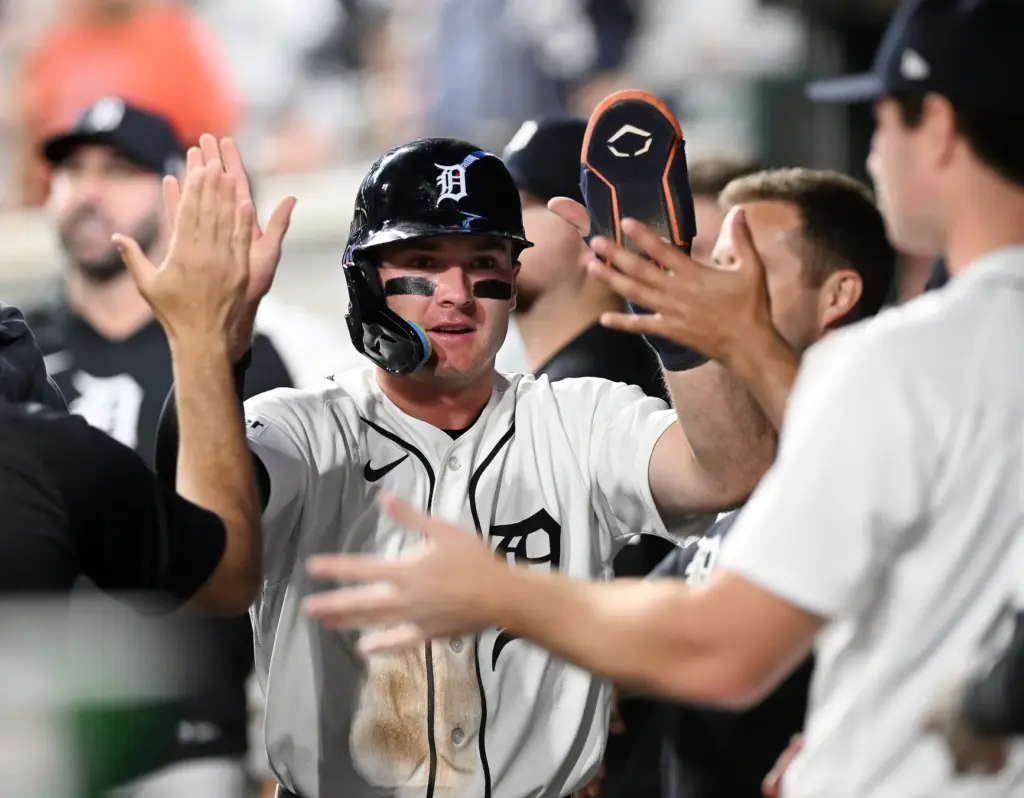
The Detroit Tigers didn’t wait. They didn’t hesitate. And most importantly, they didn’t gamble blindly. Instead, they made one of the boldest and most forward-thinking moves in modern baseball—locking up rookie phenom Kevin McGonigle to an 8-year, $150 million contract extension that could rise to $160 million with incentives.
This isn’t just a contract. It’s a statement.
In a league that historically rewards players after years of production, the Tigers are flipping the script. They’re investing in projection, upside, and trajectory rather than résumé. McGonigle hasn’t even completed a full MLB season, yet he’s already secured generational wealth and positioned himself as one of the faces of the franchise for the next decade.
And when you zoom out, this deal represents something bigger than one player—it signals a shift in how Major League Baseball values young stars in an era driven by analytics, long-term planning, and financial foresight.
🔍 Key Facts or Breaking News Details
The extension agreed upon between McGonigle and Detroit is structured with both security and upside in mind. The deal begins in 2027 and runs through the 2034 season, effectively covering his arbitration years while also buying out his first three seasons of free agency.
At its core, the contract guarantees $150 million, with performance-based escalators pushing the potential value to $160 million. The structure includes a $14 million signing bonus, followed by a progressive salary scale that starts relatively modest and climbs into the $20+ million range annually in the latter half of the deal.
This is a calculated financial model—one that balances early-career cost control with late-career earning power.
On the field, McGonigle has already shown flashes of why the Tigers were willing to move so quickly. In his early MLB appearances, he’s posted a .300+ batting average with an OPS north of .900, demonstrating elite contact ability, discipline at the plate, and an advanced approach rarely seen from players his age.
But here’s what stands out even more: the timing.
Detroit didn’t wait for a full season. They didn’t wait for arbitration. They didn’t wait for a breakout All-Star campaign. They moved early—because in today’s MLB, waiting costs more than acting.
💸 Money Angle / Wealth Perspective
From a financial standpoint, the Kevin McGonigle contract is a masterclass in risk management—for both sides.
For McGonigle, this deal guarantees life-changing money before he’s even reached his peak years. That’s security most players don’t achieve until their late 20s or early 30s. It eliminates the risk of injury, regression, or market fluctuations that could impact future earnings.
For the Tigers, the strategy is just as calculated.
If McGonigle becomes the superstar many believe he will, this deal could look like a bargain by the end of the decade. In a league where top-tier talent is already pushing toward $30–40 million annually, locking in a potential franchise cornerstone at an average annual value under $20 million is a long-term win.
This is where baseball is evolving.
Instead of paying for past performance, teams are now paying for projected value. They’re using data, analytics, and scouting to identify players who can outperform their contracts—and then securing them before the market catches up.
Let’s break it down simply:
If McGonigle becomes an All-Star: The Tigers win big financially
If he becomes a superstar: The deal becomes a steal
If he plateaus: The contract remains manageable due to structure
That’s the power of early extensions.
And it’s not just happening in Detroit. Across MLB, teams are increasingly locking in young talent early to avoid the massive price tags that come with free agency.
This is baseball catching up to what the NBA has been doing for years.
📈 Career or Performance Background
Kevin McGonigle’s rise through the baseball ranks has been nothing short of rapid—and that’s part of what makes this deal so fascinating.
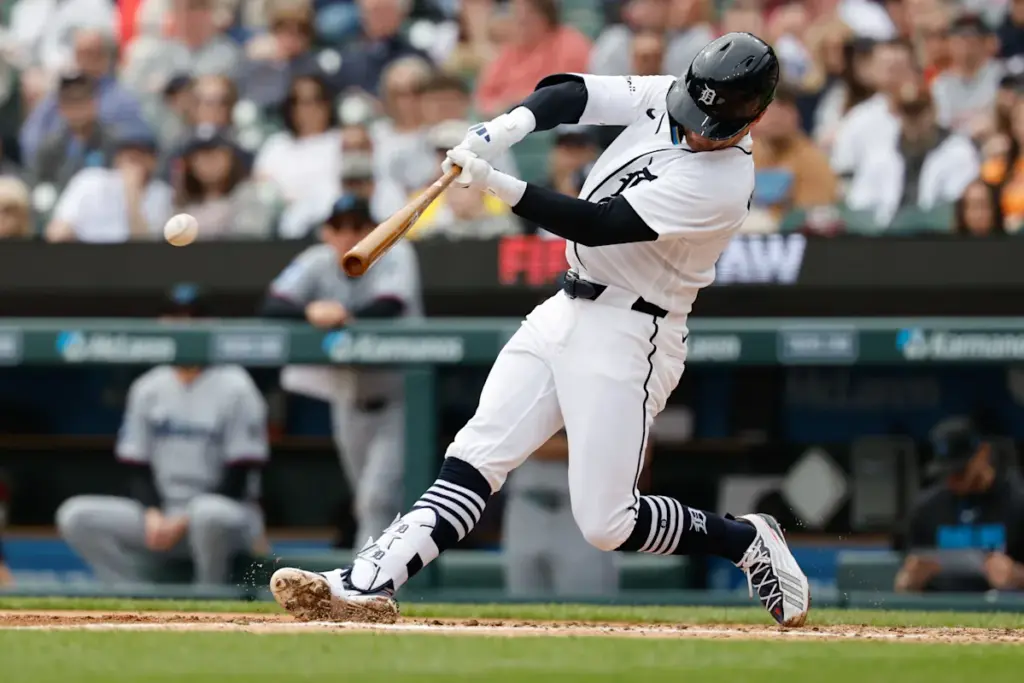
Drafted in 2023, McGonigle immediately established himself as one of the most polished hitters in the minor leagues. His combination of contact hitting, plate discipline, and baseball IQ separated him from his peers early.
Over his minor league career, he posted a batting average above .300 while showing the ability to impact the game in multiple ways—driving in runs, getting on base, and contributing defensively across the infield.
By the time the 2026 season arrived, McGonigle was widely considered one of the top prospects in all of baseball. Some rankings had him as high as No. 2 overall, trailing only the most elite pipeline talent in the sport.
But what truly accelerated his timeline was his MLB debut.
Unlike many prospects who struggle to adjust, McGonigle looked comfortable immediately. His approach at the plate didn’t change. His discipline didn’t waver. And his ability to handle big-league pitching suggested that his success wasn’t a fluke—it was sustainable.
That’s the key.
The Tigers didn’t just see talent. They saw readiness.
They saw a player whose game translates, whose mindset is advanced, and whose ceiling is high enough to justify a long-term commitment.
And in today’s MLB, that combination is rare—and expensive.
🌟 Brand, Influence & Culture Impact
Baseball has traditionally been slow when it comes to marketing young stars. Unlike the NBA or NFL, where rookies can become household names overnight, MLB has often required years of performance before elevating players into the spotlight.
But that’s changing.
Kevin McGonigle represents a new generation of players who are entering the league with built-in hype, visibility, and marketability. Social media, highlight culture, and advanced analytics have made it easier for fans to connect with players earlier in their careers.
And contracts like this only amplify that visibility.
When a rookie signs a $150 million deal, people pay attention. Fans start watching. Media coverage increases. And the player’s brand begins to grow alongside their performance.
This is where sports and culture intersect.
McGonigle isn’t just a player anymore—he’s an investment, a storyline, and potentially a face of the franchise. The Tigers are positioning him not just as a contributor, but as a cornerstone of their identity moving forward.
And in a league trying to grow its audience and appeal to younger fans, that matters.
📌 The Distinct Athlete Angle
This is exactly the type of move that defines modern sports business—and exactly why Distinct Athlete exists.
The Kevin McGonigle contract isn’t just about numbers. It’s about timing, vision, and understanding value before it becomes obvious.
The Tigers didn’t wait for validation—they acted on belief.
And that’s the difference between good organizations and great ones.
They identified a player who fits their future, projected his growth, and secured him before the market forced their hand. That’s proactive management. That’s strategic investment.
And for McGonigle, the move reflects a different kind of intelligence.
Instead of betting everything on future earnings, he secured generational wealth now while still leaving room for upside through incentives and future opportunities.
That’s a win-win.
But the bigger picture?
This deal is part of a larger trend that’s reshaping baseball:
- Younger players getting paid earlier
- Teams prioritizing long-term control
- Contracts becoming tools for strategy, not just reward
And if this trend continues, we’re going to see more deals like this—more teams locking in their stars before the rest of the league even realizes how valuable they are.
🔗 Related Reads on Distinct Athlete
- WANDER FRANCO’S MENTAL HEALTH LEAVE SHOCKS MLB
- GUARDIANS PITCHERS CLASE & ORTIZ ON PAID LEAVE IN MLB PROBE
- ANGELS’ RON WASHINGTON RECOVERING FROM QUADRUPLE BYPASS
💬 Join the Conversation
Did the Tigers make a smart investment—or did they move too early on a player with limited MLB experience?
Is this the future of baseball contracts, or a risky trend that could backfire?
Let’s talk about it—because moves like this are shaping the future of the game right in front of us.
