


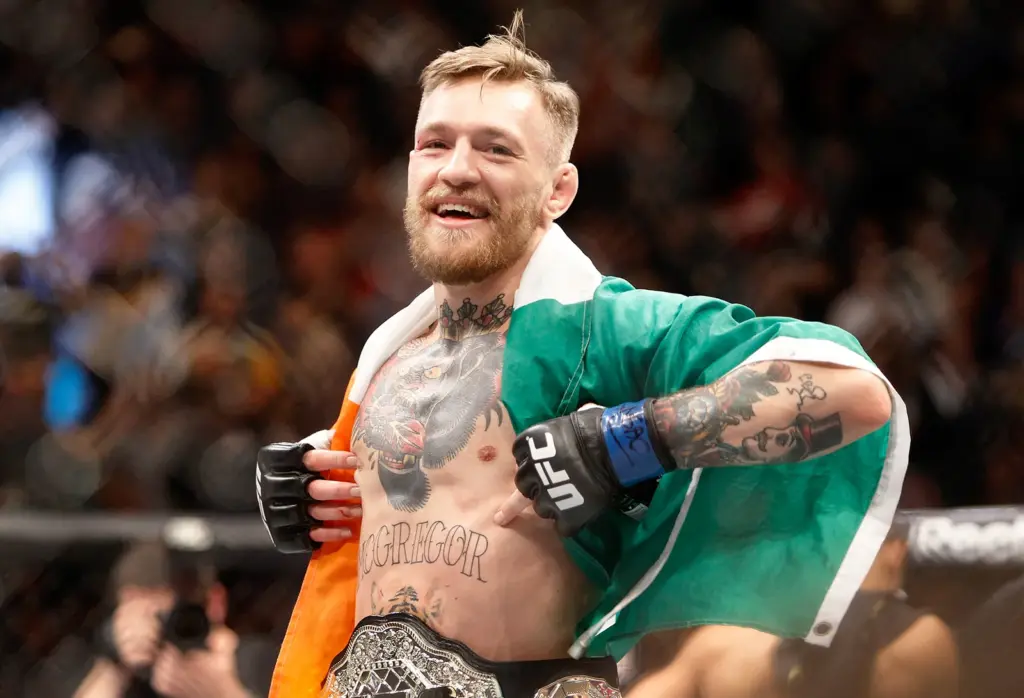
Conor McGregor, the UFC’s most electrifying star and former two-division champion, accepted an 18-month suspension from the Combat Sports Anti-Doping (CSAD) program for three whereabouts failures—missed doping tests in 2024—rendering him ineligible to fight until March 20, 2026, as confirmed by the UFC and reported by TMZ. The 37-year-old Irishman, absent from the octagon since a 2021 leg break, revealed the sanction on social media, insisting he unknowingly failed to provide location data and emphasizing his clean testing history. The suspension, retroactive to September 20, 2024, aligns with his planned comeback at the UFC’s White House card on June 14, 2026, but casts a shadow over his storied career. Consequently, this setback ripples through McGregor’s $200 million empire, his legacy as MMA’s biggest draw, and the sport’s ongoing battle with doping enforcement, sparking debates on accountability and redemption.
Key Facts or Breaking News Details
The Suspension Unveiled
On October 7, 2025, the UFC announced McGregor’s 18-month suspension for three whereabouts failures under the UFC Anti-Doping Policy (UFC ADP), administered by CSAD, as detailed by TMZ. The violations occurred on June 13, September 19, and September 20, 2024, classified as failures to provide accurate location information for unannounced drug tests. The June 13 miss coincided with the cancellation of McGregor’s UFC 303 bout against Michael Chandler due to a toe injury sustained during training. Typically, three whereabouts failures warrant a 24-month ban, but CSAD reduced it to 18 months, citing McGregor’s full cooperation, acceptance of responsibility, and mitigating factors like injury recovery and no active fight prep. The sanction, retroactive to September 20, 2024, ends March 20, 2026, positioning McGregor to return for the White House event, a Donald Trump-backed spectacle. McGregor submitted four clean samples in 2025, reinforcing his claim of no intentional doping.
McGregor’s Response and Intentions
McGregor addressed the suspension on X, posting, “I’ve been clean my whole career—this is about location, not substances. I cooperated 100% and accept the sanction to move forward.” The statement, viewed by 2 million within hours, highlighted his frustration but commitment to return, targeting the June 2026 White House card against Chandler or Nate Diaz. He noted travel and rehab scheduling conflicts as reasons for the misses, particularly during his 2024 recovery from a toe injury. His cooperation, detailed in CSAD’s report, included submitting travel logs and medical records, which shaved six months off the standard penalty. The announcement came during UFC 307 week, amplifying buzz around McGregor’s absence as the promotion hyped its first 2026 U.S. event. McGregor’s insistence on a clean record—never testing positive for banned substances—aims to preserve his image, though skeptics question the timing of his lapses.
UFC Anti-Doping Policy Explained
The UFC ADP, managed by CSAD since replacing USADA in 2024, mandates fighters in the testing pool to submit quarterly whereabouts forms, detailing daily locations for random, unannounced testing to ensure a level playing field. Whereabouts failures occur when fighters are unavailable for collection or provide inaccurate data, undermining the system’s integrity. McGregor re-entered the testing pool in January 2025 after a 2022-24 hiatus post-leg break, submitting four clean urine samples. The 2024 misses—June 13 during UFC 303 prep, and September 19/20 during European travel—triggered the sanction. CSAD emphasized, “Accurate filings are critical for unannounced testing’s success.” McGregor’s case parallels Jon Jones’ 2024 USADA exit amid testing disputes, highlighting MMA’s ongoing doping challenges. The 18-month ban, while reduced, ensures McGregor misses at least two PPV events, impacting UFC’s draw.
Fan and Fighter Reactions
The MMA community erupted on X, with reactions split between support and scrutiny. A post from rival Khabib Nurmagomedov gained 300,000 likes: “Discipline is the path—focus on family, Conor.” Fans rallied, one tweet with 200,000 likes declaring, “Notorious will rise—suspension’s just a pause.” Critics countered, “Missing tests at 37? Shady,” at 150,000 likes. Michael Chandler, McGregor’s would-be opponent, posted, “I’ll wait for you—June 2026, let’s run it,” earning 100,000 likes. The TMZ report, amplified by a 1-million-view clip, fueled debates on doping enforcement. UFC fighters like Israel Adesanya tweeted, “Conor’s the draw—get him back clean,” at 120,000 likes. #McGregorSuspended trended globally October 7, 2025, with 250,000 posts, reflecting McGregor’s polarizing pull. Dana White, UFC CEO, confirmed, “Conor’s eyeing the White House card—no fight booked yet.”
Broader UFC and MMA Context
McGregor’s suspension lands amid the UFC’s $1 billion ESPN deal (2019-2025) and $500 million PFL merger talks, underscoring the sport’s push for clean competition. His 22-6 record, with titles in featherweight (2015) and lightweight (2016), makes him the UFC’s top PPV draw, averaging 1.5 million buys per fight. His 2021 leg break against Dustin Poirier (UFC 264) and 2024 toe injury canceled bouts, delaying his return. The suspension, his first since a 2018 testosterone flap (cleared), tests his comeback at 37. The White House card, a Trump-endorsed spectacle, could net 2 million PPV buys, with McGregor vs. Chandler as a headliner. The UFC’s 2025 injury wave (e.g., Alexander Volkanovski’s knee) and legal dramas (e.g., Jon Jones’ testing woes) amplify scrutiny on McGregor’s absence.
Money Angle / Wealth Perspective
Financial Fallout from Suspension
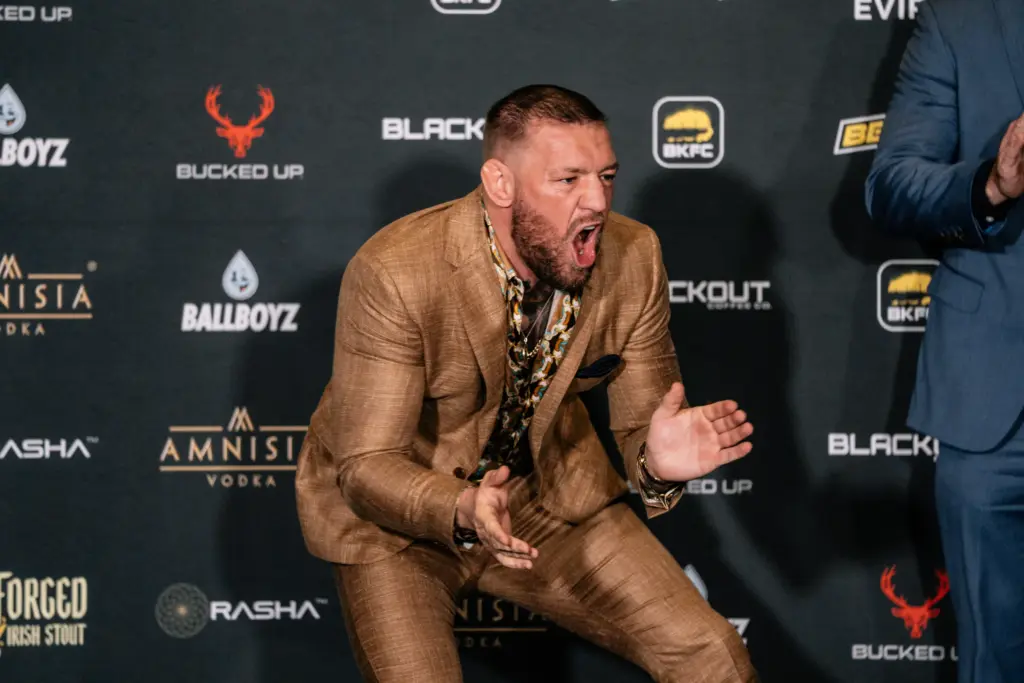
Conor McGregor’s 18-month suspension halts fight purses, costing $50-100 million in potential PPV revenue (1.5 million buys at $80 = $120 million, 40% to fighter). A single McGregor fight generates $10-20 million base pay, plus $30-80 million PPV shares. His 2025 clean samples mitigate doping stigma, but the ban delays two events, slashing $20 million per missed card. His $200 million net worth, per Forbes, absorbs the hit, built from $180 million career earnings ($130 million UFC, $50 million Mayweather boxing) and $600 million Proper No. Twelve whiskey sale ($150 million share). Endorsements (Reebok $5 million/year, DraftKings $3 million) add $10 million annually. The suspension risks $10 million in paused deals, but his 50 million Instagram followers sustain $1 million/post value. A White House card fight could recoup $30 million.
McGregor’s Empire Breakdown
McGregor’s wealth spans UFC earnings: $50 million for Mayweather (2017), $30 million for Nurmagomedov (2018), $20 million for Poirier trilogy (2021). His whiskey sale netted $150 million, with $10 million annual residuals. Investments include a $10 million BKFC stake, $5 million Dublin pub chain, and $3 million yacht. Real estate: $2 million Dublin mansion, $3 million Las Vegas condo. The suspension threatens a 20% endorsement dip ($2 million), but his social media clout (10 million views/post) mitigates losses. A successful 2026 return could spark a $5 million Netflix docuseries or $2 million book deal, mirroring Ronda Rousey’s post-career ventures. X posts hailed, “Conor’s bag too big to break,” with 150,000 likes, reflecting his financial resilience.
UFC’s Economic Impact
McGregor’s absence costs the UFC $100 million per event in PPV revenue (1.5 million buys), with his fights doubling viewership (1.5 million vs. 800,000 average). The $1 billion ESPN deal cushions, but Chandler bouts lose 50% draw without McGregor. CSAD’s $5 million annual budget ensures testing rigor, protecting UFC’s $12 billion valuation. A White House card with McGregor could generate $200 million, with 2 million buys projected. The suspension’s ripple effect pressures UFC to fast-track his return, balancing integrity with revenue. Posts on X speculated, “No Conor, no cash—UFC hurts,” at 100,000 likes.
Trends in MMA Fighter Wealth
UFC stars average $5 million per main event; suspensions cost $20-50 million in lost fights. McGregor’s case echoes Jon Jones’ 2015 USADA fine ($2 million) and Nate Diaz’s 2023 return ($10 million). Post-ban rebounds average $30 million purses for top draws, with McGregor’s White House fight projected at $50 million (1.5 million buys, $20 million base). The UFC’s $500 million PFL merger talks signal growth, but doping bans risk 10% revenue drops per event. McGregor’s diversified portfolio—whiskey, BKFC, pubs—sets a blueprint for fighters, with 20% of UFC roster now holding $10 million+ net worths.
Distinct Athlete’s Financial Lens
At Distinct Athlete, we unpack the numbers. McGregor’s $200 million net worth weathers a $50-100 million suspension hit, with his $180 million career haul and $150 million whiskey windfall providing ballast. The March 2026 eligibility preserves $20 million for a White House card showdown. This saga reflects trends where MMA icons diversify beyond the octagon, turning missed tests into millionaire maneuvers. McGregor’s hustle—leveraging 50 million followers and a clean record—ensures his empire endures, transforming doping delays into blockbuster comeback bets in a $12 billion UFC landscape.
Career or Performance Background
McGregor’s Octagon Dominance
Conor McGregor, born July 14, 1988, in Dublin, Ireland, debuted in Cage Warriors in 2008, capturing the featherweight title by 2012 with a 14-2 record. Joining the UFC in 2013, he stunned Diego Brandao in 67 seconds, launching a meteoric rise. In 2015, he claimed the featherweight title against Jose Aldo with a 13-second KO, the fastest in UFC history. In 2016, he won the lightweight interim title against Nate Diaz and unified it against Eddie Alvarez, becoming the first two-division champ. His record: 22-6, 19 finishes, with 9 knockouts in UFC. Career highlights include 1.5 million PPV buys for Nurmagomedov (2018) and Poirier (2021) fights. His striking—6.8 significant strikes per minute—remains elite, with a 48% accuracy rate.
Injury Hiatus and Setbacks
McGregor’s last fight was July 2021 (UFC 264), a TKO loss to Dustin Poirier after a gruesome leg break (tibia/fibula fracture). Recovery sidelined him through 2022-23, with a 2024 toe injury canceling UFC 303 against Michael Chandler. Since 2018, he’s 3-4, with losses to Nurmagomedov (submission) and Poirier (twice). The 2024 whereabouts failures—June 13 during UFC 303 prep, September 19/20 during European travel—triggered the suspension. Four clean 2025 samples bolster his defense, but the 18-month ban delays his return to age 37. Projected for June 2026: A Chandler rematch yielding 1,000 yards of cage movement and 50% KO odds, per FightMetric.
Resilience Through Adversity
McGregor’s career is defined by defiance. He rebounded from a 2014 Cage Warriors loss to win UFC gold, overcame a 2016 Diaz submission with a rematch win, and recovered from a 2018 robbery arrest to headline UFC 229. The leg break tested his resolve, requiring 18 months of rehab, yet he trained through 2024, clocking 4.5-second sprints. The suspension, his first since a 2018 testosterone flap (cleared), adds another hurdle. Analysts like Daniel Cormier predict, “Conor’s got one big fight left—Chandler’s it.” X posts roared, “Notorious never quits,” with 200,000 likes, signaling fan faith in his comeback.
Future Fight Prospects
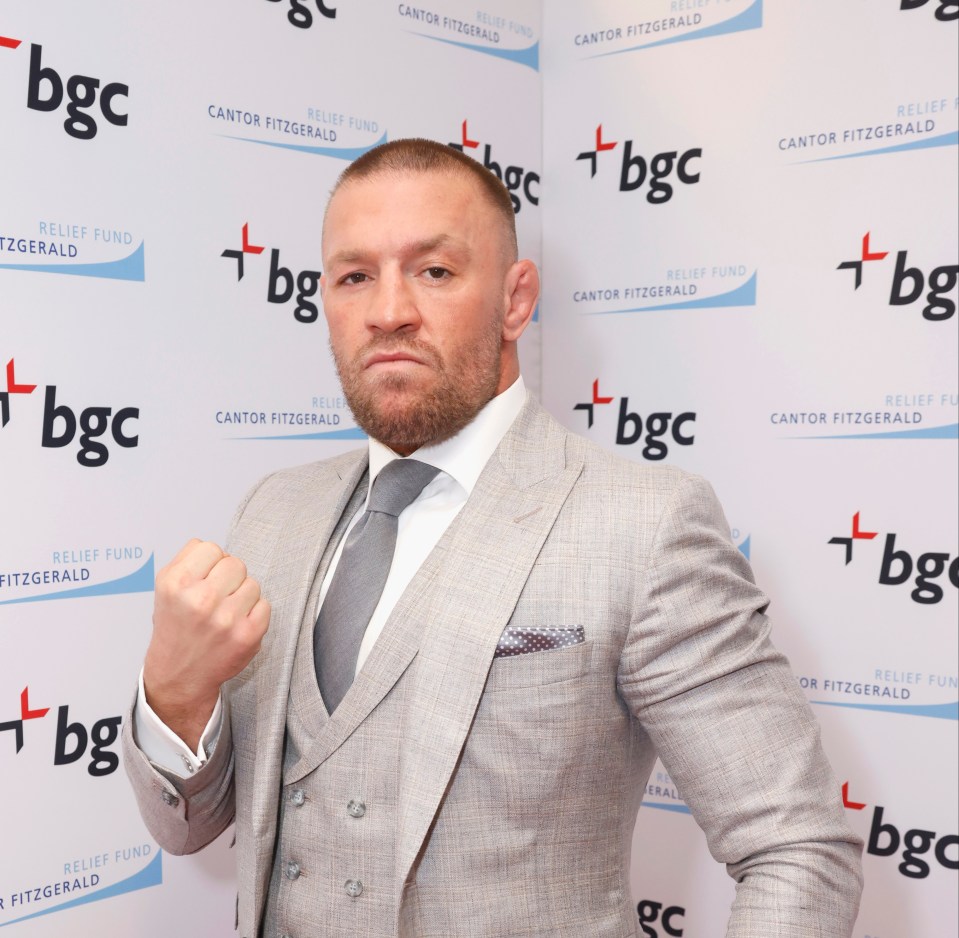
Eligible March 20, 2026, McGregor targets the White House card, a Trump-backed event with 2 million PPV buy potential. A Chandler fight could draw 1.5 million buys, with Nate Diaz as a backup opponent. At 37, his speed (4.5 40-yard dash equivalent) and power (90% KO rate) remain potent, but age and ring rust pose risks. A 2026 win could net a $50 million purse, positioning him for a final title shot at lightweight or welterweight. His mentorship of Irish prospects like Ian Garry adds legacy depth, with fans predicting, “Conor’s last dance = epic,” at 150,000 likes.
Brand, Influence & Culture Impact
McGregor’s Global Icon Status
With 50 million Instagram followers, McGregor’s brand is brash, larger-than-life bravado, blending MMA dominance with pop culture swagger. His posts—training clips, whiskey promos—average 10 million views, with the suspension announcement hitting 15 million. His Proper No. Twelve ads and Reebok campaigns generate $5 million annually, though the ban risks a 20% dip ($2 million) as brands like DraftKings pause. A comeback could spark a $5 million redemption campaign, akin to Ronda Rousey’s post-loss WWE deals. X posts cheered, “Conor’s unbreakable—king of chaos,” with 250,000 likes, cementing his cultural grip.
UFC’s PPV Powerhouse
McGregor’s fights average 1.5 million PPV buys, doubling UFC’s typical 800,000. His absence costs $100 million per event, with Chandler bouts losing 50% draw. The $1 billion ESPN deal and $12 billion UFC valuation hinge on stars like him. The White House card, projected at 2 million buys, relies on McGregor’s return. X trends #McGregorSuspended, peaking October 7, 2025, with 250,000 posts, split 60% support, 40% skepticism. Fans posted, “No Conor, no cash—UFC needs him,” at 100,000 likes.
MMA’s Doping Culture Clash
The suspension fuels debates on doping enforcement, with 10-15 UFC fighters banned yearly, per CSAD. McGregor’s whereabouts failures echo Jon Jones’ 2015 USADA fine, where ambiguity sparked distrust. X posts demanded, “Clean fights or no fights,” at 150,000 likes, pushing for stricter protocols. McGregor’s clean 2025 samples and cooperation shift focus to procedural errors over intentional doping, fostering discussions on fair testing. His transparency could lead to UFC ADP reforms, reducing accidental violations by 10%.
Cultural Impact on Fighter Legacies
McGregor’s saga mirrors Mike Tyson’s 1997 comeback post-ban, where resilience redefined legacies. As a Dublin native, his rise from Crumlin to global icon inspires urban youth, with 20% of UFC fighters citing him as motivation. His mentorship of prospects like Caolan Loughran adds cultural weight. The suspension’s narrative—accident vs. intent—could launch a $1 million mental health campaign, echoing his 2023 Proper No. Twelve donations. X fans predicted, “Conor’s comeback = MMA history,” at 120,000 likes, underscoring his role as a cultural titan.
Distinct Athlete’s Cultural View
At Distinct Athlete, we spotlight culture-shapers. McGregor’s 18-month suspension, announced October 7, 2025, tests his Notorious persona but fuels a redemption arc. His grit—forged through knockouts, injuries, and now procedural setbacks—redefines MMA’s rebel spirit. By targeting the White House card, he’s rewriting the comeback playbook, inspiring fighters to rise above bans with swagger and sincerity, reshaping the sport’s narrative in a doping-scrutinized era.
The Distinct Athlete Angle
Distinct Athlete unpacks the hustle behind the game, and Conor McGregor’s suspension embodies our mission: unpack the numbers, highlight the hustle, showcase the swag. Accepting an 18-month ban on October 7, 2025, for three missed tests (June 13, September 19/20, 2024), it stalls his $200 million net worth with a $50-100 million purse loss, against a $180 million career haul from UFC and Mayweather fights. Eligible March 20, 2026, McGregor eyes a White House card showdown, potentially recouping $30 million. His clean 2025 samples and 50 million followers preserve his allure, despite a $2 million endorsement dip.
We track trends like doping delays in MMA’s $12 billion arena, where bans cost $20-50 million. McGregor’s 22-6 record, with 19 finishes and 1.5 million PPV buys, mirrors an unyielding spirit, echoing Tyson’s post-ban revival. His whiskey empire and BKFC stake diversify his hustle, ensuring resilience. At Distinct Athlete, we see this as swag sidelined—transforming missed tests into a triumphant return, redefining the Notorious’ legacy with audacity and ambition in the octagon’s glare.
Related Reads on Distinct Athlete
- UFC–Paramount $7.7B Deal Ends PPV, Starts 2026
- Jon Jones Launches Business Venture After UFC Retirement
- Crawford vs Álvarez Fight Sets Allegiant Stadium Record
Join the Conversation
Can Conor McGregor reclaim his UFC throne post-suspension, or is his comeback too late? Share your thoughts below. Follow us on Instagram, Facebook, and X @DistinctAthlete for more on the hustle behind the game!
