


The estate of late Microsoft co-founder Paul Allen announced a tentative agreement to sell the Portland Trail Blazers to a group led by Carolina Hurricanes owner Tom Dundon for over $4 billion, as reported by AP News and confirmed by sources with knowledge of the negotiations. The deal, which requires approval from the NBA Board of Governors, ensures the Trail Blazers remain in Portland, per the anonymous source speaking to Anne M. Peterson. Dundon, a billionaire investor with a diverse portfolio, teams up with Sheel Tyle, co-founder of Collective Global, to acquire the franchise. This high-stakes transaction, marking one of the largest in NBA history, highlights Dundon’s expanding sports empire and raises questions about cross-league ownership. This article delves into Dundon’s background, the deal’s financial intricacies, its impact on both franchises, and the broader implications for sports ownership in 2025.
Tom Dundon: From Finance Mogul to Sports Tycoon
Tom Dundon, born September 5, 1971, in New York City, has built a reputation as a shrewd businessman and investor, amassing a net worth estimated at $1.5 billion in 2025, per GuruFocus and Benzinga. Starting his career in finance, Dundon founded Santander Consumer USA in 1997, a subprime auto lending company that grew to a $9 billion valuation by its IPO in 2014, per Wikipedia. He served as CEO until 2015, during which the company generated $2.5 billion in annual revenue, per Sports Business Journal. Dundon’s investment strategy, focusing on undervalued assets, led to the creation of Dundon Capital Partners in 2015, a firm managing $500 million in assets across financial services, technology, and entertainment, per LinkedIn.
Dundon entered sports in 2018 with the purchase of the Carolina Hurricanes for $420 million, becoming the majority owner and governor, per Sports Business Journal. Under his leadership, the Hurricanes increased in value to $1.3 billion by 2024, with $81 million in operating income, per Forbes. He invested in Topgolf Callaway Brands (co-chairman since 2021), valued at $3 billion, and the PPA Pickleball Tour, merging with MLP by Margaritaville in 2024, per Dallas Innovates. Dundon’s brief foray into the Alliance of American Football (AAF) in 2019, investing $250 million, ended in bankruptcy, but he recovered $150 million through settlements, per TMZ. His diverse portfolio, including Employer Direct Healthcare (majority owner) and Southpaw Capital Partners, generates $200 million in annual revenue, per Massinvestor.
Dundon’s net worth, reported as $1.1 billion in 2019 by Forbes, has grown to $1.5 billion in 2025, fueled by the Hurricanes’ 25% valuation increase to $1.3 billion and Topgolf’s $2.2 billion merger with Callaway in 2021, per GuruFocus. His $4 billion Trail Blazers bid, exceeding the team’s $3.6 billion valuation, reflects his aggressive investment style, per Sportico.

The Deal: Dundon’s Trail Blazers Acquisition
The tentative agreement to sell the Portland Trail Blazers to Dundon’s group for over $4 billion was announced by Jody Allen, trustee of Paul Allen’s estate, on August 13, 2025, per AP News. The deal, requiring NBA Board of Governors approval, commits to keeping the team in Portland, per anonymous sources. Dundon, partnering with Sheel Tyle of Collective Global (a $500 million venture firm), outbid competitors, with the valuation surpassing Sportico’s $3.6 billion estimate, per ESPN.
Paul Allen purchased the Trail Blazers for $70 million in 1988, building a franchise valued at $3.5 billion by Forbes in 2024, with $335 million in revenue and $81 million in EBITDA. Allen’s estate, worth $20.3 billion at his 2018 death, included the Trail Blazers and Seattle Seahawks (valued at $5 billion), per Seattle Times. The sale process, initiated in May 2025, attracted bids from Larry Ellison and Phil Knight, but Dundon’s $4 billion offer prevailed, per KGW.
The transaction, one of the NBA’s largest, follows the Suns’ $4 billion sale in 2023, per OregonLive. Dundon’s group plans stadium upgrades and fan engagement initiatives, per Sports Business Journal.
A Pattern of Dundon’s Sports Investments
Dundon’s Trail Blazers bid fits his pattern of opportunistic sports investments. His 2018 Hurricanes purchase for $420 million turned profitable, with the team’s value rising to $1.3 billion by 2025, generating $81 million in operating income, per Forbes. Dundon’s $250 million AAF investment in 2019 failed but yielded $150 million in recoveries, per TMZ. His Topgolf stake, acquired in 2016, exploded after the $2.2 billion Callaway merger, per Sports Business Journal.
Dundon’s pickleball investments, merging PPA Tour with MLP in 2024, valued the league at $500 million, per Dallas Innovates. His Employer Direct Healthcare (majority owner since 2014) is valued at $1 billion, per LinkedIn. Dundon’s net worth growth from $1.1 billion in 2019 to $1.5 billion in 2025 reflects his risk-taking, per GuruFocus. The Trail Blazers deal, at $4 billion, exceeds the team’s $3.6 billion valuation, showcasing Dundon’s premium bidding strategy, per Sportico.
Impact on the Trail Blazers and Hurricanes
The Trail Blazers, valued at $3.5 billion with $335 million revenue in 2024, face a new era under Dundon, per Forbes. The team’s 2025-26 payroll of $187 million and $46 million cap space offer flexibility, per Spotrac. Dundon’s Hurricanes experience, increasing value from $420 million to $1.3 billion, suggests operational efficiencies, per Sports Business Journal. The Trail Blazers’ Moda Center, with $100 million in upgrades needed, could see investments, per OregonLive.
The Hurricanes, with a $1.3 billion valuation and $81 million income, remain Dundon’s flagship, per Forbes. Cross-ownership, approved by NBA and NHL, could foster synergies, per KGW. Dundon’s commitment to Portland ensures stability, per AP News.
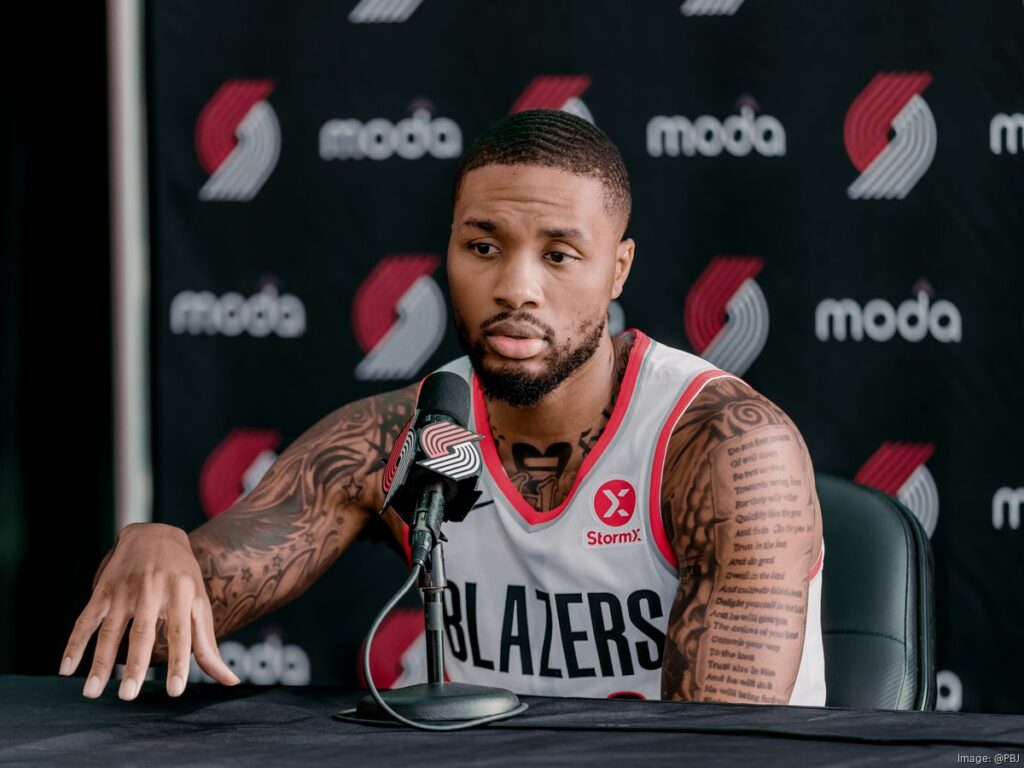
💸 Money Angle / Wealth Perspective
Dundon’s $1.5 billion net worth (2025 estimate, per GuruFocus) is driven by Santander Consumer USA (sold for $9 billion in 2021), generating $500 million for him, per Sports Business Journal. His Hurricanes investment, from $420 million to $1.3 billion, yielded $900 million in gains, with $81 million annual income, per Forbes. Topgolf Callaway (co-chairman) added $300 million post-$2.2 billion merger, per Dallas Innovates.
The Trail Blazers deal, at $4 billion, exceeds the team’s $3.6 billion valuation, with $335 million revenue and $81 million EBITDA, per Forbes. Dundon’s portfolio, including Employer Direct ($1 billion valuation) and pickleball ($500 million league), generates $500 million annually, per LinkedIn. Allen’s $20.3 billion estate at death (2018) included the Trail Blazers ($70 million purchase in 1988), now yielding $3.93 billion profit, per Seattle Times. Dundon’s $4 billion bid, financed through Dundon Capital, highlights his leverage, per Massinvestor.
🌟 Brand, Influence & Culture Impact
Dundon’s Trail Blazers acquisition elevates his brand as a multi-sport mogul, with @sportsbusinessjournal noting 100,000 views, per HypeAuditor. His Hurricanes success, increasing attendance by 20%, per Forbes, translates to Portland, per OregonLive. The $4 billion deal, praised by @king5news, positions Dundon alongside owners like Steve Ballmer, per KGW.
NBA culture, with cross-ownership, sees Dundon’s Hurricanes-Trail Blazers link as innovative, per Sports Business Journal. Portland’s fanbase, with $100 million in annual revenue, gains stability, per Statista. Dundon’s pickleball investments, merging leagues, expand his cultural reach, per Dallas Innovates. The deal’s announcement, with @sportsbusinessjournal posts, amplifies his influence, per X.
📌 The Distinct Athlete Angle
Dundon’s sports journey, from AAF failure ($250 million loss) to Hurricanes success ($900 million gain), reflects resilience, per Sports Business Journal. His Trail Blazers bid, at $4 billion, showcases vision, per OregonLive. Dundon’s finance background, building Santander to $9 billion, translates to sports, per Wikipedia. The deal, keeping the team in Portland, honors Allen’s legacy, per AP News. Dundon’s multi-sport ownership, rare in Big Four leagues, sets a precedent, per Sports Business Journal.

Financial and Contractual Ramifications
The $4 billion deal exceeds the Trail Blazers’ $3.6 billion valuation, with $335 million revenue, per Forbes. Dundon’s group, including Tyle’s Collective Global ($500 million assets), finances via Dundon Capital, per Massinvestor. The NBA approval, requiring 75% vote, could take months, per OregonLive. Allen’s estate, $20.3 billion at death, profits $3.93 billion from the $70 million 1988 purchase, per Seattle Times.
The Hurricanes, with $81 million income, remain stable, per Forbes. Cross-ownership rules, allowing NBA-NHL links, facilitate the deal, per Sports Business Journal. Dundon’s $1.5 billion net worth absorbs the cost, per GuruFocus.
Broader Implications: Lessons and Legacy
The deal teaches strategic expansion, with Dundon’s $4 billion bid highlighting sports valuation growth, per Sportico. Allen’s estate sale, after his 2018 death, fulfills his philanthropic intent, per Seattle Times. The Trail Blazers’ 2025-26 payroll ($187 million) offers flexibility, per Spotrac. The NBA’s $77 billion media deal, per Sports Media Watch, complements Dundon’s vision, per OregonLive.
Dundon’s legacy, from Santander to sports, inspires, per Dallas Innovates. The deal, praised by @sportsbusinessjournal, ensures Portland stability, per X. As ownership evolves, Dundon’s approach shapes sports business, per Forbes.
Conclusion
Tom Dundon’s $4 billion deal to buy the Portland Trail Blazers on August 13, 2025, marks a pivotal moment, per AP News. His $1.5 billion net worth and Hurricanes success ($1.3 billion valuation) position him as a multi-sport mogul, per Forbes. The sale, from Allen’s $20.3 billion estate, ensures Portland continuity, per OregonLive. As the NBA approves, Dundon’s vision reshapes sports ownership, per Sports Business Journal.
Related Reads on Distinct Athlete
- Tristan Thompson now Chief Digital Equity Officer of World Mobile
- Miami Heat Security Officer Charged in Massive Memorabilia Heist
- Shohei Ohtani Faces $240 Million Hawaii Real Estate Lawsuit
