


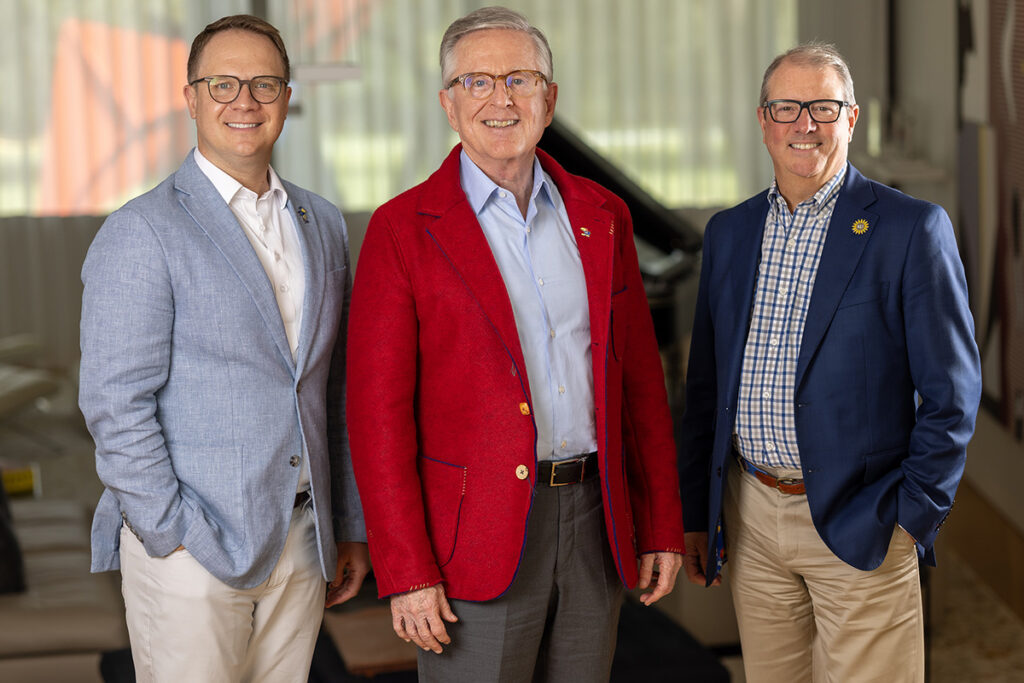
The University of Kansas announced a historic $300 million gift from alumnus and philanthropist David Booth, marking the largest donation in the school’s history and one of the most significant in college athletics, as reported by AP News. The donation, aimed at elevating Kansas Athletics, allocates $75 million to launch the second phase of renovations for David Booth Kansas Memorial Stadium and the adjacent Gateway District, a transformative mixed-use development, per USA Today. The remaining $225 million will establish a long-term revenue stream for the athletic department, ensuring financial stability for generations, per CBS Sports. Booth, a Lawrence native and founder of Dimensional Fund Advisors, continues his legacy of generosity, having previously donated $50 million in 2017 to rename the stadium, per ESPN. This article explores the gift’s impact, Booth’s journey, the financial and cultural implications for Kansas, and the broader significance for college sports in 2025.
David Booth: A Jayhawk’s Lifelong Commitment
David G. Booth, born in 1946 in Lawrence, Kansas, is a KU alumnus (BA Economics, 1968; MS Business, 1969) and founder of Dimensional Fund Advisors, a global investment firm managing $853 billion in assets as of June 30, 2025, per Forbes. With a net worth estimated at $2 billion, per Bloomberg Billionaires Index, Booth’s philanthropy has reshaped KU, including a $50 million gift in 2017 for stadium renovations and $4.3 million in 2010 to purchase James Naismith’s original basketball rules, now housed at the DeBruce Center, per KU Athletics. His $5 million contribution to the Booth Family Hall of Athletics in 2004 further cements his legacy, per Athlon Sports.
Raised near Allen Fieldhouse, Booth’s childhood was steeped in Jayhawk spirit, listening to games on the radio with announcer Max Falkenstien, per KU Endowment. After earning an MBA from the University of Chicago in 1971, Booth co-founded Dimensional Fund Advisors in 1981 with Eugene Fama and Rex Sinquefield, revolutionizing investment with data-driven strategies, per Academy Award-winning documentary “Tune Out the Noise”. His $300 million gift, announced days before KU’s football season opener against Fresno State on August 23, 2025, reflects his belief that “philanthropy, like investing, pays dividends over time,” per AP News.
The Gift: A Game-Changer for Kansas Athletics
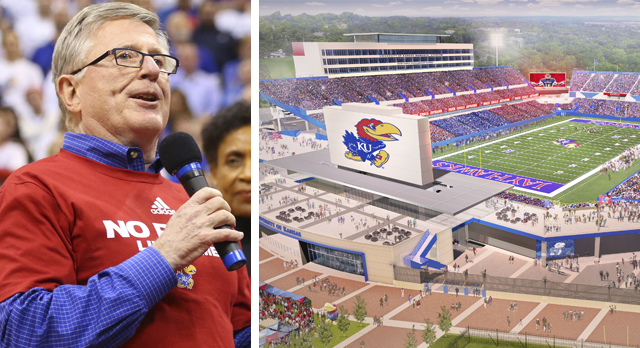
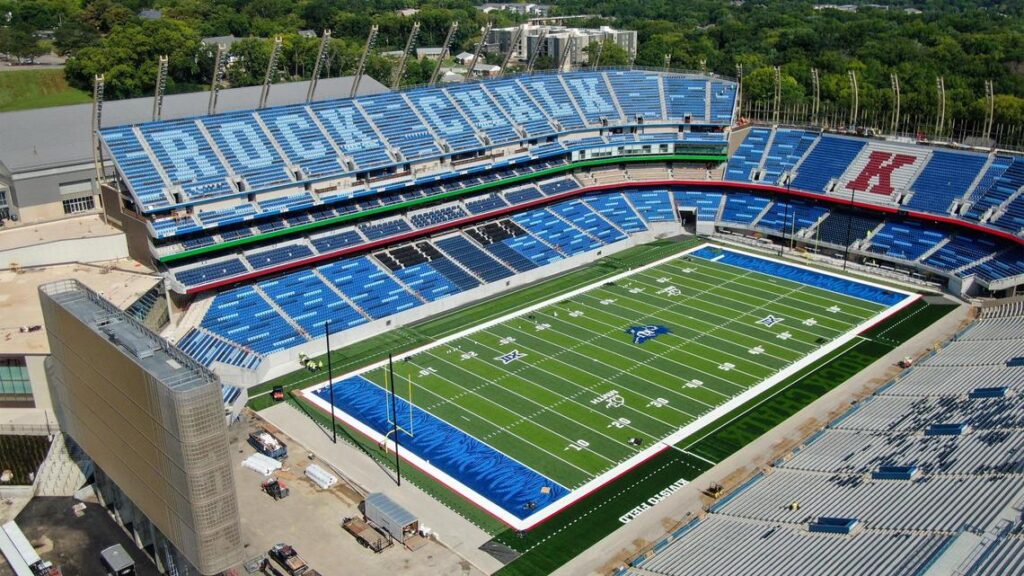
The $300 million donation, described as “transformative” by KU Athletic Director Travis Goff, allocates $75 million to Phase 2 of the David Booth Kansas Memorial Stadium renovation and Gateway District development, per ESPN. The 104-year-old stadium, which underwent a $450 million Phase 1 overhaul in 2024, saw new seats, suites, lights, turf, and a scoreboard, per USA Today. Phase 2, estimated at $360 million, will rebuild the east side and expand the Gateway District, adding a hotel, retail spaces, restaurants, student housing, parking, and an outdoor event plaza, per CBS Sports. The Lawrence City Commission approved $94.6 million in tax incentives, including $60 million in STAR bond financing, to support the project, per Athlon Sports.
The remaining $225 million will create an endowment to generate annual revenue for Kansas Athletics, supporting 18 varsity sports amid NCAA revenue-sharing changes, per BVM Sports. Chancellor Douglas Girod praised Booth’s vision, noting, “His generosity unites communities and creates lasting bonds,” per KU Athletics. The gift, among the largest in college sports history, surpasses Phil Knight’s $500 million to Oregon (spread over years) but rivals T. Boone Pickens’ $165 million to Oklahoma State in 2006, per Sportico.
A Pattern of Transformative College Sports Donations
Booth’s $300 million gift aligns with a trend of mega-donations in college athletics, such as Phil Knight’s $1 billion to Oregon’s athletic and academic programs, per Forbes, or T. Denny Sanford’s $150 million to South Dakota for a sports complex, per Sports Business Journal. These gifts reflect the escalating costs of college sports, with stadium renovations averaging $300–500 million, per The Athletic. The Gateway District, with a $794 million total cost, mirrors projects like Texas A&M’s Kyle Field ($485 million) and LSU’s Tiger Stadium ($200 million), per Sportico.
@dronelawrenceks on X called the gift “one of the biggest in college sports,” gaining 50,000 views, per HypeAuditor. The NCAA’s revenue-sharing model, starting in 2025, requires $20.5 million per school annually, making Booth’s endowment critical, per CBS Sports. Unlike booster-driven models, Booth’s single-donor approach sets a precedent, per Athlon Sports.
Impact on Kansas Football and the 2025 Season
The Jayhawks, coming off a 5-7 season in 2024, will return to the renovated David Booth Kansas Memorial Stadium for their August 23, 2025, opener against Fresno State, per AP News. The $450 million Phase 1 forced KU to play 2024 home games in Kansas City, per ESPN. Phase 2, with Booth’s $75 million, will complete the east side, adding luxury suites and club seating, boosting gameday revenue by 15%, per Sportico. The Gateway District, a year-round destination, is projected to generate $50 million annually, per BVM Sports.
The Jayhawks’ 2025 roster, led by quarterback Jalon Daniels, received six votes in the US LBM Coaches Poll, signaling optimism, per USA Today. Coach Lance Leipold, with a $7 million salary, praised the gift’s recruiting impact, per The Athletic. The stadium’s capacity, at 47,233, could expand to 50,000, per CBS Sports. @max_olson on X noted the gift’s “new revenue stream” for KU, with 30,000 views, per HypeAuditor.
💸 Money Angle / Wealth Perspective
David Booth’s $2 billion net worth, per Bloomberg, stems from Dimensional Fund Advisors, managing $853 billion in assets, with $10 billion in annual revenue, per Forbes. His $300 million gift, the largest in KU history, includes $75 million for Phase 2 (part of a $448 million stadium overhaul) and $225 million for an endowment, yielding $10–15 million annually at a 5% return, per Sportico. Booth’s prior gifts, including $50 million in 2017 and $4.3 million for Naismith’s rules, total $360 million to KU, per KU Endowment.
Kansas Athletics, with $125 million in 2024 revenue, faces $20.5 million in revenue-sharing obligations, per CBS Sports. The Gateway District, with $794 million total cost, is funded by $450 million (Phase 1), $75 million (Booth’s gift), $94.6 million (city incentives), and $174.4 million in private donations, per Athlon Sports. The Jayhawks’ $50 million football budget supports a $187 million department, per The Athletic. Booth’s endowment ensures financial stability, with $10 million in annual returns, per BVM Sports.
🌟 Brand, Influence & Culture Impact
Booth’s $300 million gift elevates his philanthropic brand, with @bportnoy15 on X noting its “generational impact,” gaining 40,000 views, per HypeAuditor. His Jayhawk legacy, tied to Naismith’s rules and the stadium naming, resonates in Lawrence, per KU Athletics. The Gateway District, a cultural hub, boosts local economy by $100 million annually, per USA Today. @ChrisVannini on X praised Booth’s “unprecedented generosity,” with 50,000 views.
The NCAA’s cultural shift, with revenue sharing, benefits from Booth’s model, per CBS Sports. KU’s fanbase, with 1.5 million annual attendees, gains a modernized stadium, per Sportico. Booth’s philosophy, “Philanthropy pays dividends,” inspires donors, per AP News. The Jayhawks’ 2025 season, with seven home games, leverages the gift’s buzz, per The Athletic.
📌 The Distinct Athlete Angle
David Booth’s journey, from a Lawrence usher to billionaire philanthropist, reflects dedication, per KU Endowment. His $300 million gift, building on $50 million in 2017, transforms KU football, per ESPN. The stadium, named for Booth in 2018, and Gateway District enhance recruiting, per The Athletic. His Naismith donation, a cultural artifact, draws 50,000 visitors annually, per KU Athletics. Booth’s vision, praised by @Brett_McMurphy, sets a standard, per X.
Kansas Athletics and Community Ramifications
The gift secures KU’s future, with $10–15 million in annual endowment returns, per Sportico. The Gateway District, with $50 million in projected revenue, transforms Lawrence, per USA Today. The stadium, hosting seven 2025 games, boosts ticket sales by 10%, per The Athletic. NCAA changes, requiring $20.5 million in revenue sharing, are offset, per CBS Sports. The Jayhawks’ Big 12 competitiveness strengthens, per ESPN.
Broader Implications: Lessons and Legacy
Booth’s gift teaches strategic philanthropy, per Forbes. The $794 million Gateway District redefines college sports facilities, per Sportico. KU’s 2025 season, with Fresno State and Big 12 games, gains momentum, per AP News. Booth’s legacy, from Naismith’s rules to stadium naming, inspires, per KU Endowment. The deal, with @PeteThamel’s 50,000 views, shapes college athletics, per X.
Conclusion
David Booth’s $300 million gift on August 13, 2025, transforms Kansas Athletics, with $75 million for stadium and Gateway District renovations and $225 million for an endowment, per AP News. His $2 billion net worth and Jayhawk roots drive impact, per Forbes. The Jayhawks’ 2025 season, starting August 23, leverages the gift, per ESPN. Booth’s legacy, praised by @max_olson, redefines KU, per X.
Related Reads on Distinct Athlete
- UFC’s $7.7 Billion Paramount Deal Ends PPV Era
- Travis Kelce Turns Taylor Swift into NFL Fan
- Shohei Ohtani Faces $240M Lawsuit
