


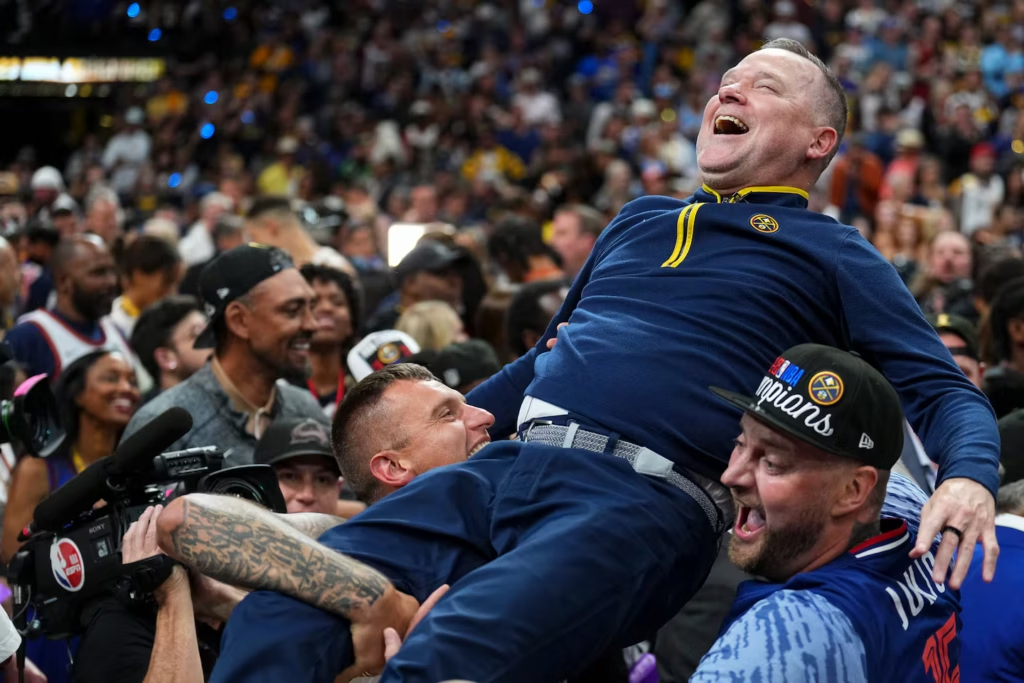
North Carolina just made one of the boldest hires college basketball has seen in years, and it says everything about where the sport is headed. According to ESPN, UNC is set to hire former Denver Nuggets head coach Michael Malone as its next men’s basketball coach, ending the Hubert Davis era and handing one of the sport’s most tradition-heavy programs to a coach whose résumé was built almost entirely in the NBA. Malone won an NBA championship with Denver in 2023, owns 510 NBA head coaching wins, and has not coached in college since a stint as an assistant at Manhattan in 2001. In a vacuum, that is already shocking. But in the context of modern college sports, it is even bigger.
This move is not just about replacing a coach. It is about UNC looking at the current college basketball economy and deciding that the old model is no longer enough. The Tar Heels are one of the most iconic brands in the sport, but college basketball in 2026 is not driven by legacy alone. It is driven by recruiting leverage, portal speed, NIL structure, revenue-sharing strategy, and the ability to sell development in a pro-style environment. Malone represents all of that. He gives UNC instant NBA credibility in living rooms, immediate national attention in the transfer portal, and a fresh identity in a sport that now looks more like professional roster building than the old four-year development model.
For years, “The Carolina Way” was about continuity, family lineage, and institutional trust. Dean Smith led to Roy Williams. Roy Williams led to Hubert Davis. UNC was proud of its internal DNA. But this hire breaks that pattern in the clearest possible way. Malone is not a Carolina insider. He is not a former UNC player. He is not a coach molded inside Chapel Hill’s traditional system. He is a basketball lifer from the pro game, and his arrival signals that UNC believes the next phase of winning requires something different. It requires a coach who understands how to manage talent at a high level, command a locker room full of personalities, and operate in a results-driven environment where pressure never leaves.
That is why this story matters beyond Chapel Hill. This is not just a UNC story. It is a college sports power story. It is a story about one of the sport’s blue bloods deciding that prestige alone will not keep it ahead. It is about adapting before being left behind. And if Michael Malone works at UNC, the entire sport will feel it.
Part 1
🔍 Key Facts or Breaking News Details
The core news is straightforward, but the implications are layered. ESPN reported Monday that UNC intends to hire Michael Malone as its next head coach. Malone is coming off a long NBA run that included head coaching stops with Sacramento and Denver, and he spent the past several months as an ESPN analyst after Denver fired him in April 2025. ESPN also reported that UNC had been searching for nearly two weeks since firing Hubert Davis, who was dismissed on March 24, 2026, five days after the Tar Heels blew a 19-point lead in a first-round NCAA tournament loss to VCU.
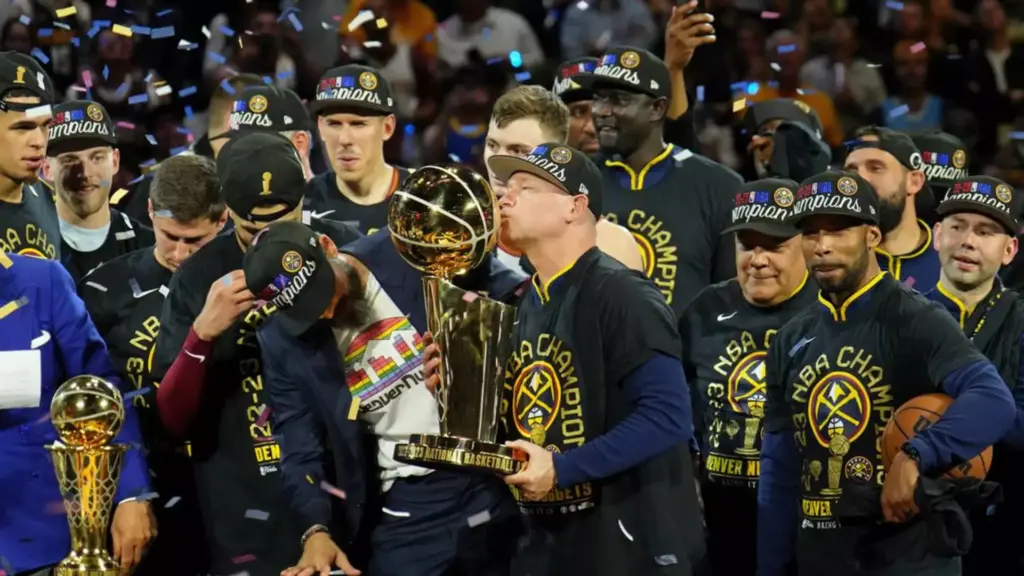
The résumé is real. Malone won the Nuggets’ first NBA championship in 2023 and finished his NBA head coaching career to date with 510 wins across 12 seasons. In Denver alone, he went 471-327. ESPN also noted that he has not coached college basketball since serving as an assistant at Manhattan in 2001, after earlier assistant stops at Providence and Oakland. So this is not a coach making a small career pivot. This is a major level change, from managing pros and playoff expectations to recruiting teenagers, rebuilding a college roster, and navigating the transfer portal every offseason.
UNC’s recent trajectory explains why the school was willing to think this big. Davis went 125-54 in five seasons, reached the national championship game in his first year, but then failed to advance past the Sweet 16 in each of the next four seasons. ESPN’s report makes clear that UNC had explored other high-profile names, including Dusty May, Tommy Lloyd, and T.J. Otzelberger, before pivoting to Malone after those coaches publicly committed to staying where they were. That matters because it tells you UNC did not stumble into this move. The school exhausted several traditional college paths and then chose disruption.
There is also a symbolic layer here. ESPN reported that Malone’s standing with Michael Jordan and Roy Williamshelped in the process. That detail matters because UNC knows exactly how radical this hire looks from the outside. Bringing in an NBA outsider could have felt like a rejection of Carolina identity. Instead, the school appears to have leaned on its most respected internal voices to validate the move. That gives the hire institutional cover, but it also makes a larger point: even the people most associated with Carolina tradition understand that the business of college basketball has changed.
And that business is the real story.
💸 Money Angle / Wealth Perspective
Michael Malone’s hire makes the most sense when you stop thinking about college basketball as a campus sport and start thinking about it as an aggressive talent market. That is what it is now. Coaches are not just teaching offense and defense. They are helping programs attract investment, justify NIL spending, stabilize donors, shape roster acquisition, and create a believable path from college stardom to pro earnings.
In that environment, Malone is a financial asset as much as a basketball hire.
A five-star recruit or elite portal player now asks a different set of questions than players asked even four years ago. The questions are no longer only: Who develops guards best? Who gets on TV most? Which arena is loudest? Now the questions are also: How strong is your collective? What kind of NIL ecosystem do you have? Who can prepare me for the NBA? Who understands how pros are developed? Can your coaching brand raise my market value?Malone gives UNC a strong answer to every one of those questions.
That is a huge deal because NIL has made reputation directly convertible into money. A player coached by an NBA champion head coach carries a stronger story for brands, a stronger pitch for agents, and a stronger image for fans. Even before a player signs a pro contract, the perception of “NBA-ready” becomes part of his valuation. For UNC, that means Malone can help raise the earning ceiling of players simply by changing how they are viewed.
There is another money layer too: donor confidence. Big-time programs do not operate only on ticket sales and TV money. They operate on belief. Donors, boosters, and collective backers have to believe that their money is helping build something powerful. Hiring Michael Malone sends a loud message that UNC is serious about competing at the highest level of the modern game. This is not a cautious move. It is a premium move. And premium moves often unlock premium money.
That matters because the resource war in college sports is getting sharper, not softer. Schools are balancing salaries, NIL support structures, roster retention costs, recruiting infrastructure, general managers, and revenue-sharing plans. Every major coaching hire now sits inside that larger budget picture. A coach is no longer just a sideline leader. He is a face of your competitive economy.
If Malone wins, UNC will not just gain trophies. It will gain more donor trust, more recruiting pull, more national relevance, and a stronger basketball business model. That is why this move feels so important. It is not just an attempt to improve. It is an attempt to future-proof one of the sport’s richest brands.
📈 Career or Performance Background
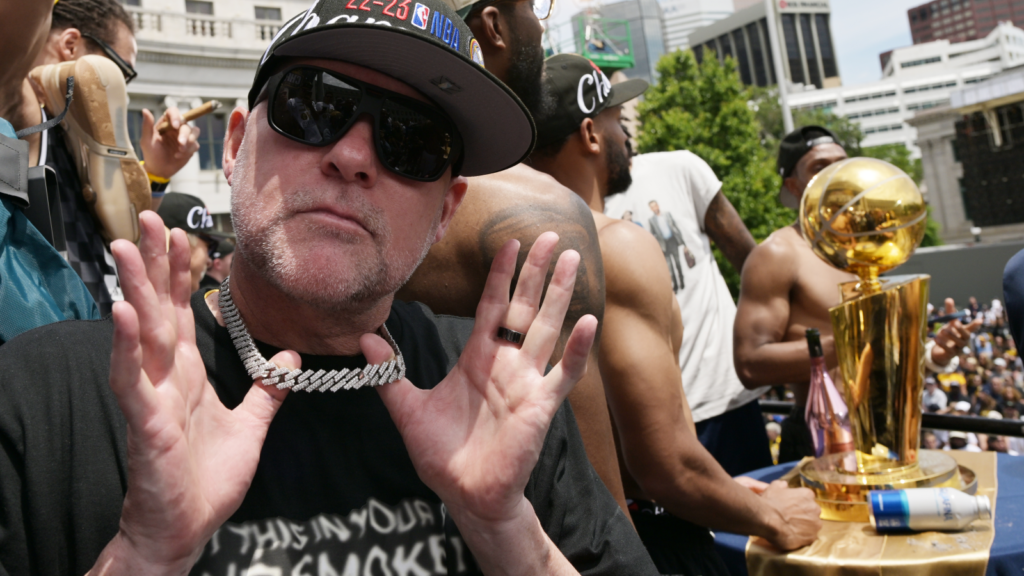
Michael Malone is one of those coaches whose value is clearer the more you study his path. He did not inherit an easy runway in the NBA. He built his reputation through years of assistant work, tough jobs, and the kind of professional environment where results decide everything. That matters because it shaped him into a coach known for accountability, structure, preparation, and defensive identity.
His greatest achievement, of course, came in Denver. The Nuggets under Malone became a team with real tactical discipline and continuity. He helped oversee the rise of Nikola Jokić from a gifted big man into a transformational superstar, and he led Denver to the franchise’s first championship in 2023. That is not nothing. In a basketball world overflowing with scheme talk and personality management, Malone has already proven he can guide elite talent through the pressure of championship expectations.
But translating that to college will be fascinating. College players are younger, more volatile, and more transient. NBA coaches do not recruit high school juniors. They do not spend every spring trying to re-recruit their own roster from the portal. They do not build chemistry while players weigh NIL offers from other schools. Malone’s basketball intelligence is not in question. The question is how quickly he adapts to a world where roster building never stops.
That said, there is a case that modern college basketball may now be more favorable to NBA coaches than it used to be. Why? Because the sport is becoming more transactional and more talent-driven. Veteran college coaches once held a huge edge because they knew how to build slowly, develop within systems, and manage players who stayed multiple years. But today’s environment is faster and more pro-like. Players move quickly. Expectations are immediate. Roster construction is year to year. In some ways, Malone may be arriving at the perfect time.
Part 2
🌟 Brand, Influence & Culture Impact
There is no way to talk about this move without talking about culture. UNC has always sold more than wins. It has sold identity. Wearing Carolina blue meant stepping into a tradition built by all-time names. That tradition still matters, but the Malone hire shows that brand preservation is no longer enough by itself. The new culture question is different: Can your tradition survive if you refuse to evolve?
UNC’s answer appears to be no.
That is what makes this hire so culturally significant. A school this historic does not make a move like this unless it believes the landscape has fundamentally changed. Michael Malone is not there to keep the museum clean. He is there to help UNC compete in a sport where the strongest brands are now the ones willing to move fastest, spend smartest, and sell the clearest vision.
For recruits, the cultural message is obvious. UNC can still offer Jordan Brand aesthetics, Dean Dome prestige, and one of the most recognizable jerseys in basketball. But now it can also offer an NBA championship head coach, pro-level credibility, and the promise that your development will not just be talked about in abstract terms. It will be tied to a coach who has actually led pros to the top of the mountain. That changes the flavor of UNC’s pitch.
For transfers, this may matter even more. The portal is not only about talent. It is about fit, timing, trust, and exposure. A proven college player looking for a final stop may see Malone as someone who can sharpen his game for the next level while also restoring UNC’s national edge. That could make Chapel Hill one of the most interesting portal destinations in the country.
For fans, the emotional reaction will be split. Some will love the ambition. Others will worry that the hire moves UNC further away from its roots. That tension is real, but it is also part of a broader truth in sports: every iconic brand reaches a point where protecting the old image can start to weaken the actual product. UNC appears to have decided that its culture should be defined not by repeating itself, but by staying powerful enough to matter.
And for the rest of college basketball, this is a warning shot. If a blue blood like North Carolina is willing to abandon type and bring in an NBA outsider with this kind of profile, then no school can assume the old categories still apply. The line between pro basketball and college basketball is thinner than it has ever been.
📌 The Distinct Athlete Angle
This is exactly the kind of move Distinct Athlete exists to cover, because it sits at the intersection of sports, money, status, leverage, and cultural evolution.
Most people will talk about whether Michael Malone can win at UNC. That matters, but it is only the surface. The deeper conversation is about what UNC is telling the market. The Tar Heels are saying that elite college basketball is no longer just about finding a coach who understands college. It is about finding a coach who can command a modern basketball operation.
That operation now includes NIL relationships, donor confidence, transfer portal retention, national media relevance, player branding, and pro pipeline credibility. Malone touches all of those categories.
From a Distinct Athlete perspective, the hire immediately changes four things.
First, it changes UNC’s recruiting perception. Perception matters because perception influences access. The moment a school feels more serious, more modern, and more NBA-connected, it gets deeper in more conversations with elite players.
Second, it changes player value. Athletes at UNC now have a stronger narrative to sell: they are playing for a coach who has won at the highest level. That can help with endorsements, interviews, media framing, and brand identity.
Third, it changes program power. In a sport where so many teams are trying to keep up, power comes from signaling strength before the season even starts. UNC just did that in a huge way.
Fourth, it changes the broader blue blood arms race. Duke, Kansas, Kentucky, UConn, and others are all watching this. If Malone succeeds, every major program will have to think harder about whether the old coaching template is still enough for the new era.
This is why the hire is bigger than basketball purity debates. It is about strategic adaptation. The richest programs in college sports are trying to figure out how to protect their brands while embracing a more professional model. UNC just gave one answer: hire someone who already knows how to function inside professional pressure.
🔗 Related Reads on Distinct Athlete
Use these in your Related Reads section with your actual internal URLs:
IOWA BASKETBALL STAR TAVION BANKS ARRESTED AFTER DRUNKEN BAR FIGHT
JUJU WATKINS STAYS GROUNDED DESPITE MASSIVE NIKE SHOE DEAL
DAMIAN LILLARD NAMED GENERAL MANAGER OF WEBER STATE BASKETBALL
Those fit your brand because they connect athlete value, contract power, and modern sports influence.
Part 3
💬 Join the Conversation
The biggest question now is simple: Will Michael Malone work at UNC, or is this move too far outside the college box?
There are good arguments on both sides. On one hand, Malone brings instant credibility, championship experience, and a no-nonsense basketball mind. He has coached stars, handled pressure, and operated where every mistake gets magnified. That is the kind of résumé very few college coaches can match. On the other hand, college basketball is not the NBA. Recruiting never sleeps. NIL creates daily relationship management. The portal can gut a roster overnight. And even the best tactician has to be able to sell vision to 17-year-olds and their families.
Still, that is what makes this move so compelling. It is not safe. It is not predictable. It is not built to make everybody comfortable. It is built to push UNC forward in a sport that is changing by the month.
If Malone succeeds, North Carolina will look like a visionary giant that saw where college basketball was going before everyone else fully accepted it. If he fails, critics will say the program lost itself chasing the pro game. But even that criticism would prove the point: the stakes are no longer just about wins and losses. They are about identity, money, relevance, and whether legacy brands can still lead the future instead of just remembering the past.
That is why this story matters right now. It is not just a coaching story. It is a sign of what elite college sports has become. The old language of loyalty and continuity still exists, but it now shares space with roster valuation, developmental branding, donor confidence, and strategic aggression. The schools that understand that fastest will have the best chance to dominate the next era.
UNC has chosen its path. Instead of doubling down on comfort, it chose disruption. Instead of hiring the most familiar name, it hired one of the most unexpected. Instead of pretending college basketball is still the same sport it was a decade ago, it acted like the game had changed and demanded a different kind of leader.
Now the spotlight gets brighter.
Can Michael Malone recruit elite talent the way he once coached elite talent? Can he build a college locker room that buys into his style quickly enough to win at a place where patience is limited? Can he turn UNC into the kind of modern basketball machine that thrives in a portal-and-NIL era? And maybe the biggest question of all: if this works, how many other powerhouse programs will try to copy it?
Because that is the thing about bold hires. They do not stay isolated for long. If North Carolina hits big with Malone, the ripple effect will travel across every level of the sport. NBA assistants will become more attractive to college search committees. Former pro head coaches may start looking at college jobs differently. Athletic directors may become more willing to sacrifice tradition for tactical edge. And the line between college basketball and the professional game will get even thinner.
For players, that could mean more opportunities, better development, and stronger earning potential. For fans, it could mean a sport that becomes even more talent-rich and national. For traditionalists, it may mean letting go of an older idea of what college basketball used to be. But whether you love it or hate it, one thing is clear: UNC did not make this move by accident. It made it because college basketball’s center of gravity is shifting, and sitting still is starting to look more dangerous than taking a swing.
That is what makes Michael Malone UNC such a huge story. It is about a coach, but it is also about an era. It is about one of the sport’s proudest brands deciding that survival at the top requires reinvention. It is about Chapel Hill looking at the modern basketball economy and choosing urgency over nostalgia.
And in today’s college sports world, that kind of urgency can change everything.
What do you think? Did UNC just make the smartest move in college basketball, or did it gamble too hard on NBA prestige? Is Michael Malone the kind of coach who can dominate in the NIL era, or is college basketball still too different from the pro game? And if this works, which powerhouse program do you think will be next to make a similar move?
Join the conversation on DistinctAthlete.com and across your social platforms. This is more than a coaching hire. It is a power move, a money move, and potentially a blueprint for the future of the sport.be more favorable to NBA coaches than it used to be. Why? Because the sport is becoming more transactional and more talent-driven. Veteran college coaches once held a huge edge because they knew how to build slowly, develop within systems, and manage players who stayed multiple years. But today’s environment is faster and more pro-like. Players move quickly. Expectations are immediate. Roster construction is year to year. In some ways, Malone may be arriving at the perfect time.
