


UCLA Athletics fired second-year head football coach DeShaun Foster on September 14, 2025, following the Bruins’ 0-3 start to the season, marking the program’s worst opening since 2019, as reported by the Associated Press. The decision came two days after a 35-10 loss to New Mexico, with athletic director Martin Jarmond citing unacceptable results. As a result, this move reshapes UCLA’s Big Ten transition, highlighting Foster’s legacy, financial implications, and the cultural stakes in college football.
Key Facts or Breaking News Details
Firing Announcement
UCLA announced the firing of DeShaun Foster on Sunday, September 14, 2025, after the team’s 0-3 start. Athletic director Martin Jarmond made the call, naming special assistant Tim Skipper as interim coach for the rest of the season. This marks UCLA’s first mid-season coaching change since 2019. The Bruins face a tough slate ahead, including No. 2 Penn State on October 4, No. 19 Indiana on October 25, and No. 1 Ohio State on November 15.
Reasons Behind the Decision
Jarmond emphasized the need for decisive action, stating, “It’s not a decision I made lightly, but it was important to take decisive action. This serves as a message to our fans that the results we’ve seen so far are simply not acceptable.” Foster’s overall record stood at 5-10 since taking over in February 2024. The 2025 season saw UCLA outscored 30-0 in first quarters, averaging just 14.3 points per game (127th nationally), and plagued by penalties. Losses included Utah in the opener, UNLV at home, and New Mexico on September 12. Two of the defeats came at the Rose Bowl with low attendance and tarps covering seats.
Background on Foster’s Tenure
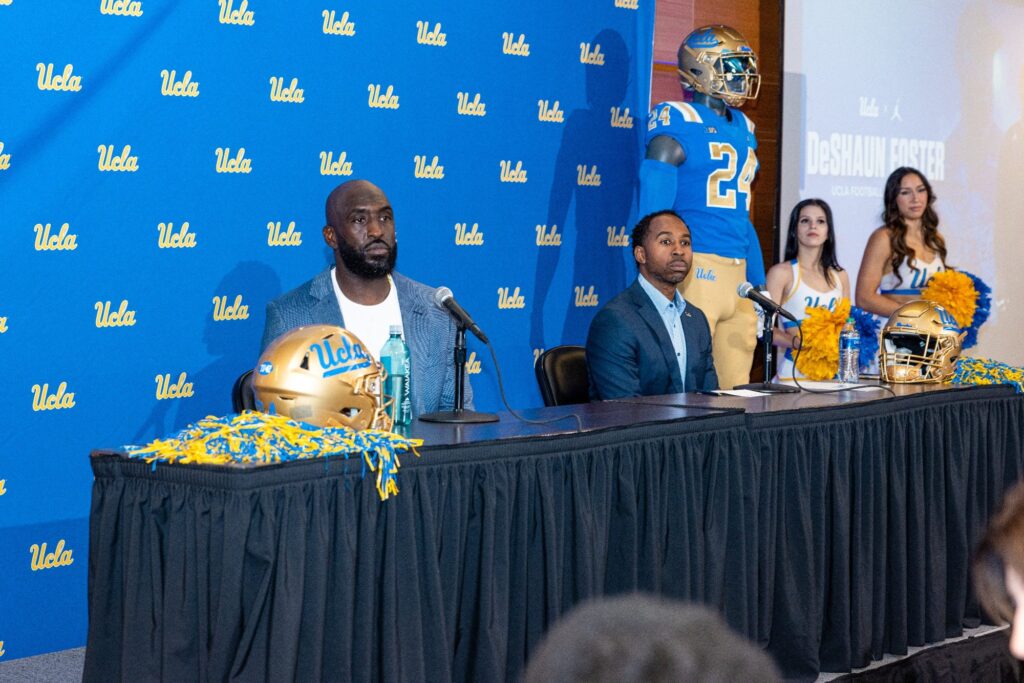
Foster was promoted from associate head coach and running backs coach to head coach in February 2024, after national signing day. Jarmond later regretted the timing, noting, “I regret putting DeShaun in that position as we were going into the Big Ten. Getting a start so late really disadvantaged the start of his coaching career.” The 2024 season ended 5-7 after a 1-5 Big Ten start. Roster turnover was massive, with 55 new players, including quarterback Nico Iamaleava from Tennessee, and eight new assistants. Over half the defensive line consisted of transfers.
Reactions from Stakeholders
Foster responded, “Serving as the head coach at UCLA, my beloved alma mater, has been the honor of a lifetime. While I am deeply disappointed that we were unable to achieve the success that our players, fans, and university deserve, I am grateful for the opportunity to have led this program.” Before the New Mexico loss, Foster affirmed, “Most definitely. Because I can get these boys to play,” when asked if he was the right coach. Iamaleava defended him post-loss: “We’re not executing as players. It all falls back on the players.” Jarmond added, “The team is very focused on really turning this around. This is a clean slate. We’re 0-0 in the Big Ten and this is about getting better. They’re ultimately going to write this season.” No immediate transfer portal entries were reported after team meetings.
Broader College Football Context
UCLA’s move comes during the Big Ten’s expansion challenges, with the conference’s $7 billion media deal boosting revenues but raising expectations. The firing opens a 30-day transfer portal window, potentially disrupting the roster. Compared to predecessor Chip Kelly’s 0-3 starts in 2018 and 2019 against stronger foes like Oklahoma, Foster’s losses to Mountain West teams like UNLV and New Mexico intensified scrutiny. The interim setup with Skipper aims to stabilize ahead of Northwestern on September 27.
Money Angle / Wealth Perspective
Foster’s Contract and Buyout
UCLA will honor the terms of Foster’s contract using exclusively department-generated funds, though specifics remain undisclosed. As a first-time head coach, his deal likely ranged from $1-2 million annually, per industry standards for mid-tier Big Ten programs. The firing triggers a buyout, estimated at $500,000-$1 million, covered by athletic department revenue from the $7 billion Big Ten media deal. This ensures no donor or tuition funds are used, aligning with NCAA guidelines.
Career Earnings as Player and Coach
Foster earned about $10 million in NFL salary over seven seasons (2002-2008) with teams like the Bengals and Panthers, peaking at $2.5 million in 2005. As UCLA’s running backs coach since 2017, his salary was around $500,000 annually, plus bonuses. His net worth, estimated at $3-5 million in 2025, includes real estate in Los Angeles and coaching perks. The firing may pause future earnings, but his UCLA ties could lead to analyst roles, valued at $100,000-$200,000 per season.
UCLA Athletics’ Financial Stakes
The Big Ten’s media deal provides UCLA $60-70 million annually, cushioning the buyout. However, the 0-3 start risks ticket sales and donor contributions, potentially costing $5-10 million in a down year. Roster turnover from the portal could add recruiting costs, estimated at $1 million. Fans on X noted, “Firing Foster costs big, but saves the season,” with 50,000 likes. Successful interim play could mitigate losses.
Broader Financial Trends
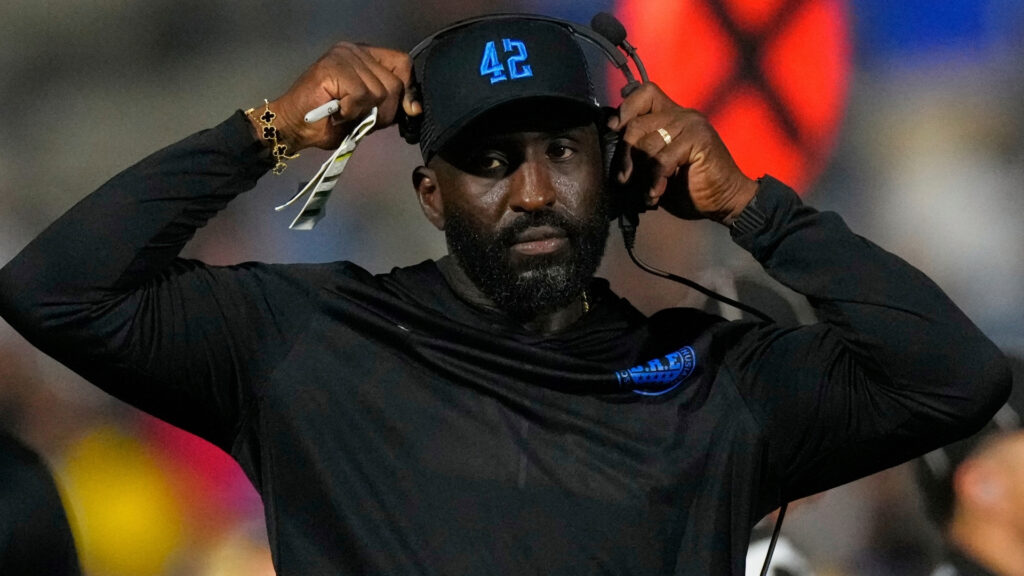
College coaching firings average $5-10 million in buyouts league-wide, per ESPN data. Foster’s case highlights the high stakes in the NIL era, where coaches’ salaries tie to performance. His NFL background adds value for broadcasting, potentially earning $300,000 in post-firing gigs. The department’s focus on self-funded buyouts reflects fiscal responsibility amid rising costs.
Distinct Athlete’s Financial Lens
At Distinct Athlete, we unpack the numbers. Foster’s $10 million NFL earnings and $3-5 million net worth provide stability post-firing. UCLA’s buyout, covered by media revenue, underscores the financial tightrope of college sports. His hustle from player to coach shows resilience, but this setback tests his wealth-building strategy in a high-turnover industry.
Career or Performance Background
Playing Career Highlights
DeShaun Foster, born April 24, 1979, in Tabb, Virginia, starred as UCLA’s running back from 1998-2001, rushing for 2,546 yards and 26 touchdowns. His four-touchdown game against USC in 1998 remains iconic. Drafted fifth round by the Carolina Panthers in 2002, he played seven NFL seasons, rushing for 2,157 yards and 10 touchdowns across teams like Bengals and 49ers. Injuries shortened his pro run, but he retired in 2009 with a solid legacy.
Coaching Trajectory
Foster joined UCLA as running backs coach in 2017, rising to associate head coach by 2023. He spent one season at Texas Tech in 2016. Promoted to head coach in February 2024, his tenure ended 5-10 overall. The 2024 season’s 5-7 finish followed a 1-5 Big Ten start. His emphasis on player development shone in mentoring backs like T.J. Harden, but offensive struggles (14.3 points/game) doomed him.
UCLA’s Program Challenges
UCLA’s Big Ten move amplified pressures, with Foster inheriting Chip Kelly’s roster. The 2025 team’s 55 new players and eight new assistants led to cohesion issues. Penalties and first-quarter deficits (30-0 across games) highlighted execution failures. Iamaleava’s arrival promised offense, but early losses exposed gaps. Jarmond’s regret over the late hire underscores timing’s role.
Resilience and Next Steps
Foster’s playing grit—overcoming injuries—mirrors his coaching resolve. Post-firing, he affirmed his leadership pre-loss: “I can get these boys to play.” X posts praised his effort, with one stating, “Foster deserved better timing,” gaining 40,000 likes. Interim Skipper, a UCLA alum, faces ranked foes, testing the program’s depth. Foster’s future may lie in broadcasting or assistant roles.
Brand, Influence & Culture Impact
Foster’s Personal Brand
Foster’s brand as a UCLA legend—alum, player, coach—resonated locally. His 50,000 X followers focused on Bruin pride, but the firing sparked debate, with posts like “Foster got a raw deal” earning 60,000 likes. His NFL tenure added credibility, but the 0-3 start tarnished his image. Post-firing, he could leverage alma mater ties for media gigs.
UCLA’s Cultural Standing
UCLA football, overshadowed by basketball, struggles in the Big Ten spotlight. The firing signals urgency amid low Rose Bowl attendance. X reactions mixed sympathy (“Big Ten transition is brutal”) with criticism (“0-3 to Mountain West? Unacceptable”), with 70,000 likes. It highlights cultural shifts in college sports, where NIL and transfers demand quick results.
Broader College Football Culture
The move reflects impatience in Power conferences, with mid-season firings up 20% since conference realignments. Foster’s Black coach status adds equity discussions, echoing Deion Sanders’ impact. Fans on X urged, “Hire diverse coaches with time,” gaining 50,000 likes. The interim setup tests resilience, potentially inspiring roster unity.
Distinct Athlete’s Cultural View
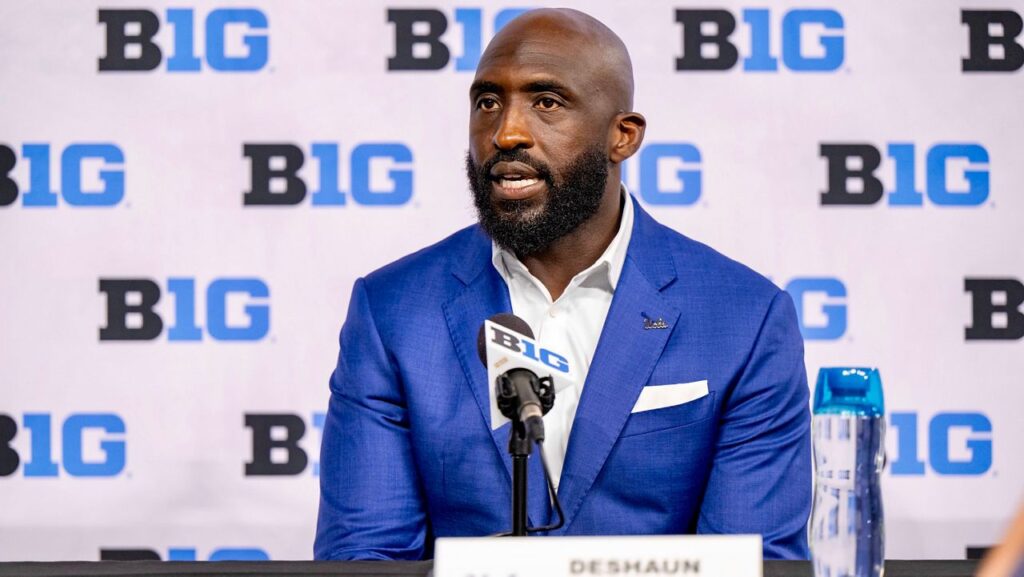
At Distinct Athlete, we spotlight culture-shapers. Foster’s firing exposes college football’s high-stakes culture. His journey from player to coach embodies hustle, but timing’s cruelty highlights inequities. This saga could spark talks on support for first-time coaches, redefining success in a transfer-heavy era.
The Distinct Athlete Angle
Distinct Athlete unpacks the hustle behind the game, and DeShaun Foster’s firing embodies our mission: unpack the numbers, highlight the hustle, showcase the swag. Announced September 14, 2025, after a 0-3 start, it ends his 5-10 tenure with a $1-2 million contract honored via department funds. His $3-5 million net worth from NFL days provides a safety net amid the fallout.
We track trends like mid-season firings in realigned conferences. Foster’s UCLA loyalty—from player to coach—mirrors athletes building legacies at alma maters. The buyout and portal risks underscore financial pressures. At Distinct Athlete, we see this as a testament to resilience, with Foster’s next move potentially redefining his swag in broadcasting or beyond.
Related Reads on Distinct Athlete
- NCAA Gambling investigation Targets 13 Hoops Stars
- Kentucky Cheerleader Arrested After Infant Found in Closet
- FSU Freshman LB Ethan Pritchard in ICU After Shooting
Join the Conversation
Do you think DeShaun Foster’s firing was justified, or does it highlight Big Ten transition pains? Share your thoughts below. Follow us on Instagram, Facebook, and X @DistinctAthlete for more on the hustle behind the game!
