


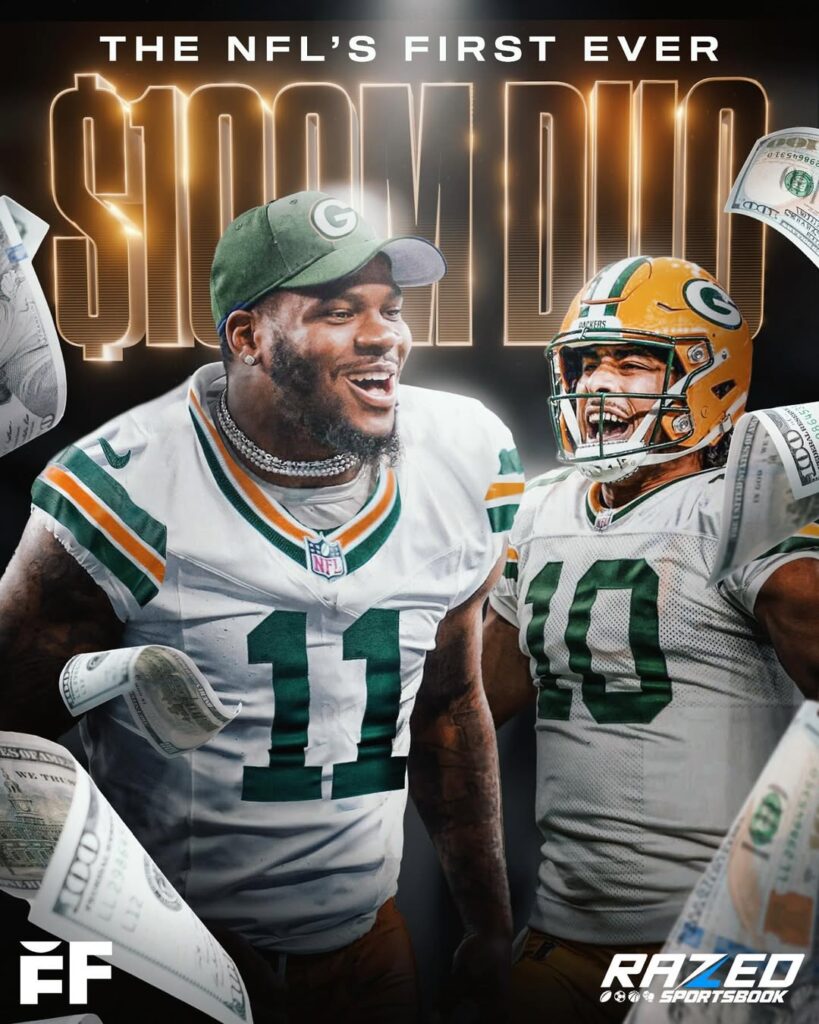
Micah Parsons just detonated NFL headlines. Green Bay traded for Dallas’ All-Pro pass rusher and immediately locked him into a four-year, $188 million contract that resets the non-QB market and thrusts the Packers into the title convo. The deal contains $120 million in guarantees and a $44 million signing bonus, with first-three-year cash flows front-loaded for maximum impact in the Jordan Love window. For Packers fans, it’s a Reggie-White-type swing; for the money crowd, it’s a masterclass in cap engineering, bonus timing, and the hidden math of state taxes.
🔍 Key Facts or Breaking News Details
Green Bay didn’t just nibble—they bit down hard. The Packers acquired Parsons from Dallas and then made him the league’s highest-paid non-QB at $47M per year. Reports detail a $188M total value, $120M in guarantees, and that $44M signing bonus that shapes both cash flow and cap. Multiple outlets also report Dallas received DL Kenny Clark plus two future first-round picks—a staggering haul that still might not soothe Cowboys fans who just lost a 26-year-old defensive nuke in his prime.
From a structure standpoint, early-year cash matters: ~$62M through Year 1, $100M through two, and $141M through three, per reporting tied to the league’s transaction insiders. That cadence signals classic contending-team logic—buy wins now while your QB window is open and spread cap pain with bonuses and options later.
💸 Money Angle / Wealth Perspective
This deal lives at the intersection of guarantees, signing-bonus treatment, and state tax math.
The terms. Sources peg Parsons’ contract at 4 years, $188M ($47M AAV) with $120M guaranteed and a $44M signing bonus—the latter is the single most important wealth lever in the contract because signing-bonus dollars are paid quickly and prorated for cap. Early cash includes about $62M in Year 1, a massive liquidity event even before endorsement upside.
Per Tom Pelissero, Parsons’ new contract contains $120 million in guaranteed money, with $62 million through the first new year, $100 million through two years, and $141 million through three years. Parsons’ fully guaranteed money contains another $16 million for injury vests a year early, and his contract also contains a $44 million signing bonus.
Parsons’ base salary for 2025 is only $1.17 million (fully guaranteed) and remains similarly low over the next two years — $2.387 million in 2026 (fully guaranteed) and $3.107 million in 2027 (injury guaranteed) — but it skyrockets to $40.55 million in 2028, partially guaranteed to injury. He then has a $43.55 million base salary in 2029, with a $1 million bonus if he is on the Packers’ 90 man roster. Parsons also has a $38 million option bonus in 2026 and a $34.443 million option bonus in 2027, both of which are fully guaranteed.
Parsons’ contract also has a $200,000 per-game active bonus, as well as a $250,000 workout bonus, each year. In all, Parsons’ contract is worth a total of $210 million when the final year of his rookie contract is included.
Why the bonus matters for taxes. In general, signing bonuses are typically taxed by your state of residence and are often not subject to “duty-days” jock-tax allocation (provided they meet “true signing bonus” tests). That means where you live can materially change your net after a colossal bonus—Texas (0% state income tax) vs. Wisconsin (top bracket 7.65%) is a meaningful swing.
Jock tax basics. Pro athletes owe state income tax to the states where they work based on “duty days” (preseason through the last official game), with their home state taxing residents on all income but granting credits for taxes paid elsewhere. The net effect: living in a no-income-tax state still saves substantial money, especially on signing bonuses and home-state duty days.
Texas vs. Wisconsin headline rates.
- Texas: No individual state income tax.
- Wisconsin: Top bracket ~7.65% for high earners (precise brackets vary by filing status).
We’ll run the specific “Texas vs Wisconsin” net math (with clear assumptions) in Part 2. For now, understand the signing bonus + home-state duty days combo likely makes Wisconsin residency significantly more expensive than Texas residency, even after credits.
📈 Career or Performance Background
Parsons arrived in the league like a thunderclap—Defensive Rookie of the Year in 2021, then three-time All-Pro and four-time Pro Bowler out of the gate, reshaping how coordinators slide protections. At just 26, he’s entering the true prime edge years when bend, get-off, and power typically converge. Green Bay is betting $188M that his pressure rate, double-team gravity, and pass-rush win rate remain elite through the deal’s core. Add in the Packers’ tradition of turning marquee defensive signings into Lombardi fuel and the football logic syncs with the financial logic.
🌟 Brand, Influence & Culture Impact
Parsons doesn’t just sack QBs—he drives engagement. The moment the news broke, Packers futures shifted, NFC power maps redrew, and national studio shows lit up. For Green Bay’s brand, landing a market-setting contract with a superstar in his mid-20s screams ambition. For Parsons, the move from Dallas’ mega-spotlight to TitleTown’s mythos can expand his personal brand from “Cowboys celebrity” to “Green Bay legend”—especially if this deal correlates with a deep January run. The $44M bonus gives him immediate off-field optionality: equity deals, real estate, and a more diversified asset base while he’s still in the career-apex earnings window.
📌 The Distinct Athlete Angle
A few things make this a pure Distinct Athlete story:
- Market-setter economics. This is the highest AAV for a non-QB—a data point that will lift all elite edge boats in the next cycle. Contract comps and leverage dynamics from here forward will cite Parsons as Exhibit A.
- Cash-flow timing. $62M in Year 1 supercharges liquidity early—critical for wealth compounding, risk management, and post-career runway. Bonus timing also interacts with cap via prorations and future option/roster triggers.
- Tax arbitrage…flipped. Dallas to Green Bay inverts the common “play in no-tax state” thesis. We’ll quantify the state-tax delta for Texas vs Wisconsin in Part 2, but the gist is simple: where you live and where you work matters—especially for eight-figure bonuses.
🔍 Key Facts (Structure Deep Dive)
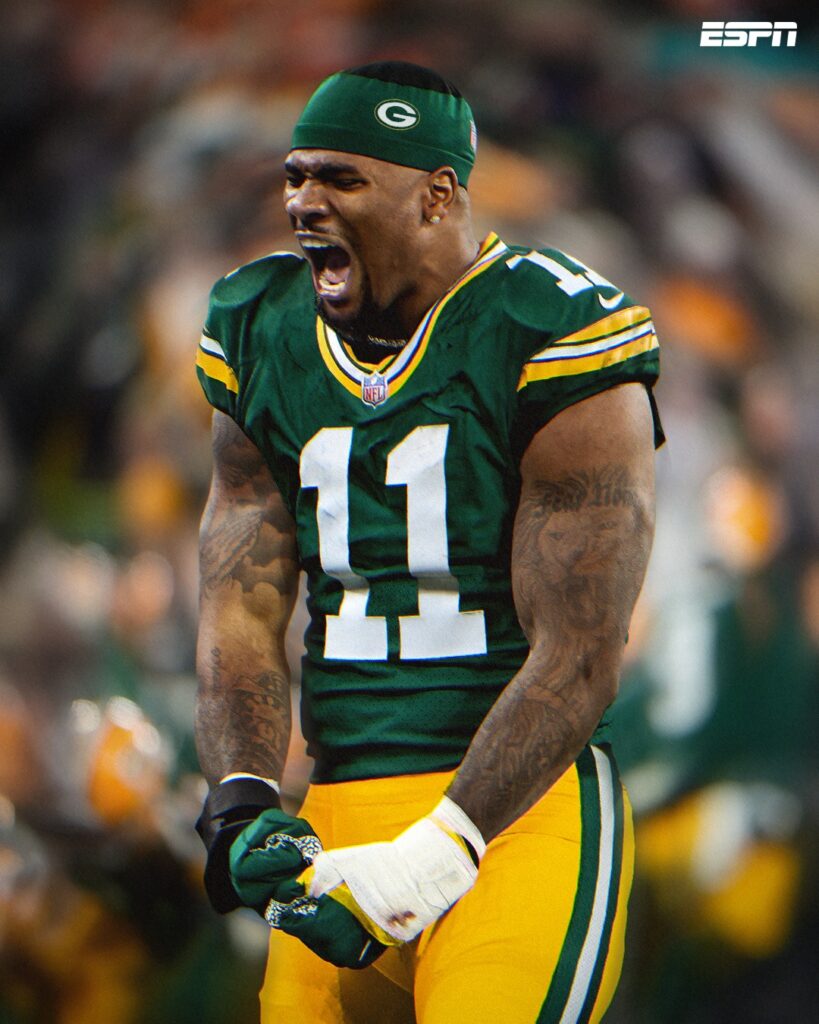
Reports tied to league insiders outline a structure with low base salaries early, massive signing/option bonus mechanics, and front-loaded cash: roughly $62M in Year 1, $100M through two, $141M through three, anchored by a $44M signing bonus and $120M in guarantees. That’s textbook contender structuring—get the player in, win now, push proration later.
The trade itself (Kenny Clark + two 1sts to Dallas) set the table for immediate Green Bay contention and a longer Dallas reset. No matter your rooting interest, it’s one of the biggest roster-economics stories of the decade.
💸 Money Angle (Cont.) — Texas vs Wisconsin: Net-of-State-Tax Math
Below is a simple, apples-to-apples comparison that isolates state income taxes only (not federal, not FICA/Medicare, not agent fees, not endorsements, not city taxes, and not itemized SALT effects). It’s designed to show the directional difference if the exact same contract were earned under Texas residency vs Wisconsin residency. It also does not attempt to fully model jock-tax duty-day allocations—we’ll note the implications after the table.
Key assumptions for illustration
- We treat state tax as applied to reported cash earnings in that year to show directional impact.
- Texas: 0% state income tax.
- Wisconsin: Top bracket ~7.65% (high-income threshold easily exceeded by Parsons).
- Year-1 cash: ≈$62M, including the $44M signing bonus. Four-year total: $188M.
- Signing-bonus note: True signing bonuses are generally taxed by the player’s state of residence (often not jock-taxed)—one big reason residency strategy matters.
Year 1 (≈$62,000,000 cash)
- Texas state tax: ~$0
- Wisconsin state tax (7.65%): ~$$4,743,000
Directional delta (WI vs TX, Year 1): ≈ $4.74M more paid to the state under Wisconsin residency.
Four-Year Total ($188,000,000)
- Texas state tax: ~$0
- Wisconsin state tax (7.65%): ≈ $14,382,000
Directional delta (WI vs TX, 4-yr): ≈ $14.38M more to the state under Wisconsin residency.
Reality check (jock tax & credits):
- Wisconsin residents are taxed on all income, but they receive credits for taxes paid to other states. If the other state’s rate is lower than WI’s 7.65%, the player may still owe additional WI tax to “top up” to the WI rate. If the other state (e.g., California) is higher than WI, no WI top-up is due on that portion. Net: a Wisconsin resident’s effective state rate tends to gravitate toward WI’s top bracket on most income except high-tax states.
- Texas residents pay $0 to Texas but still pay non-resident taxes to the states where they play or train (the “jock tax”). Because Dallas holds a large chunk of training camp in Oxnard, CA, Cowboys players historically accumulate California duty days, which is one reason Texas residency doesn’t always mean a zero state bill—but it’s still a major advantage, especially on signing bonuses and home-state practice days. By contrast, the Packers hold camp and practice in Wisconsin, concentrating more duty days in a state that does tax income.
Bottom line: Even after duty-day nuances and credits, the Wisconsin residency path is directionally far more expensive than Texas residency, and it’s most painful in Year 1 when the $44M signing bonus hits. That’s the paradox of this blockbuster: football-wise, Green Bay is perfect; tax-wise, Dallas (or Florida/Nevada-style states) is friendlier.
📈 Career/Performance (Advanced Context)
Parsons’ value isn’t a mystery—pressure is the currency of modern defense. He changes protection rules, forces quicker QB decisions, and elevates coverage metrics downstream. Green Bay’s existing front now gets a double dividend: better 1-on-1s for its young rushers and fewer 7-step concepts from opponents. That’s strategic lift you can tie to wins—and wins are the real ROI on $188M. (The front-loaded cash signals Green Bay knows exactly what window it’s buying.)
🌟 Brand, Influence & Culture (Advanced)
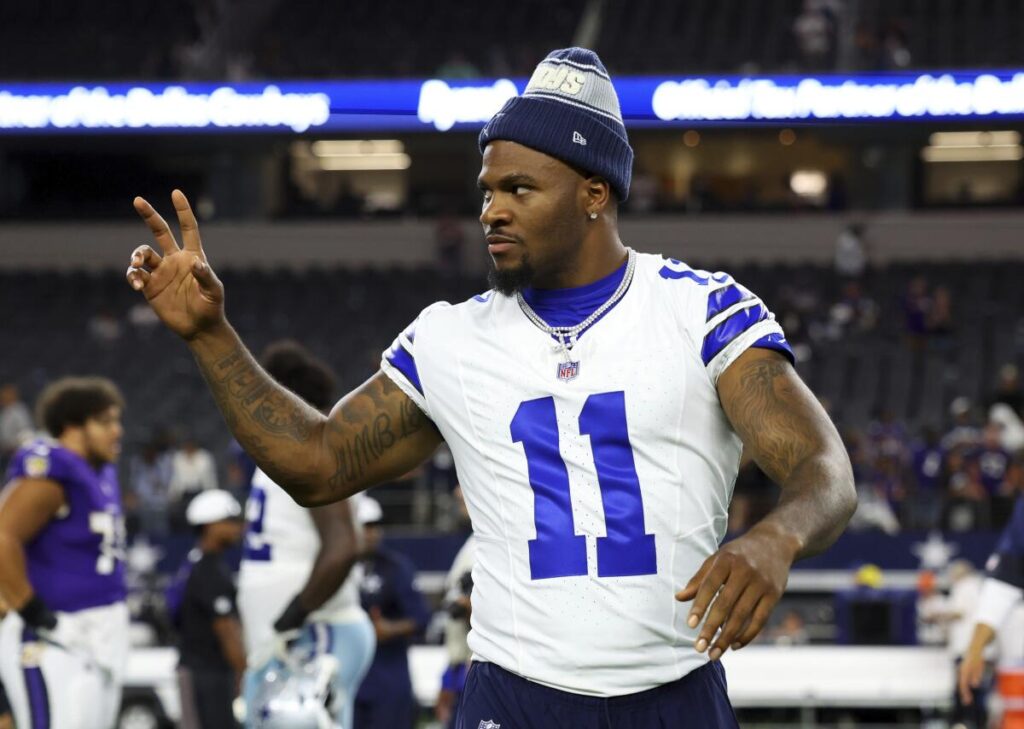
- Packers Brand Equity: Signing a market-setting defender while your homegrown QB ascends is a message to sponsors, PSL holders, and national TV partners. It says “we’re in”, which correlates with merchandise spikes and premium inventory pricing across a season.
- Parsons’ Personal Brand: The Green Bay mythology—the bikes to practice, Lambeau in January—gives Parsons a legacy runway that’s priceless if he delivers rings. Short-term, the $62M Year-1 cash gives him a portfolio advantage: he can diversify into real estate, private deals, or passive income while hedging career volatility.
🔗 Related Reads on Distinct Athlete
- NFL Loosens Tom Brady Rules for Fox Analyst Role
- NFL Uses Ex-Players to Teach Betting Rules
- Washington Commanders Extend Terry McLaurin for 3y, $96M
💬 Join the Conversation
Packers fans: Is $188M the price of a Lombardi—or too rich for a non-QB? Cowboys fans: did Jerry get enough back? Drop your take on Instagram, Facebook, and X @DistinctAthlete.
