


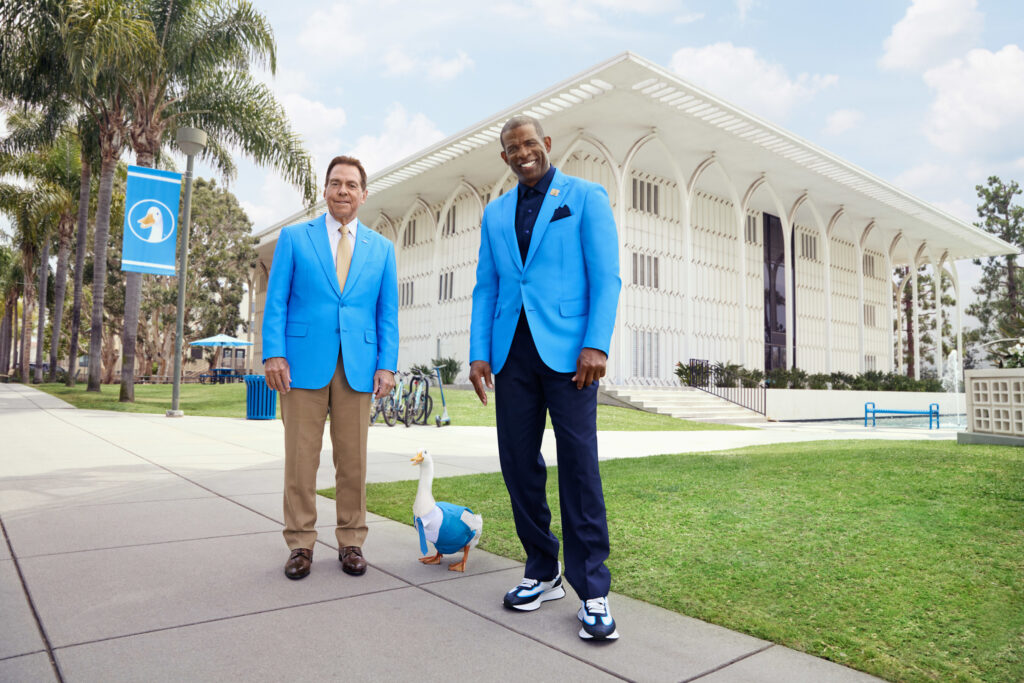
Colorado head coach Deion Sanders proposed a revolutionary idea for the College Football Playoff (CFP): paying players for reaching the tournament, with increased bonuses for each round their teams advance, as reported by AP News. Backed by former Alabama coach Nick Saban, the proposal aims to bring equity to college athletics, ensuring all players on playoff teams receive equal compensation, mirroring the NFL’s playoff bonus structure. Announced during their promotion of a new Aflac commercial, Sanders and Saban emphasized the need for structural reform in the rapidly evolving landscape of Name, Image, and Likeness (NIL) deals and revenue sharing. This article explores the proposal’s details, Sanders’ and Saban’s careers and finances, the financial and cultural implications for college football, and the potential impact on the 2025 CFP season.
The Proposal: Paying Playoff Players for Equity
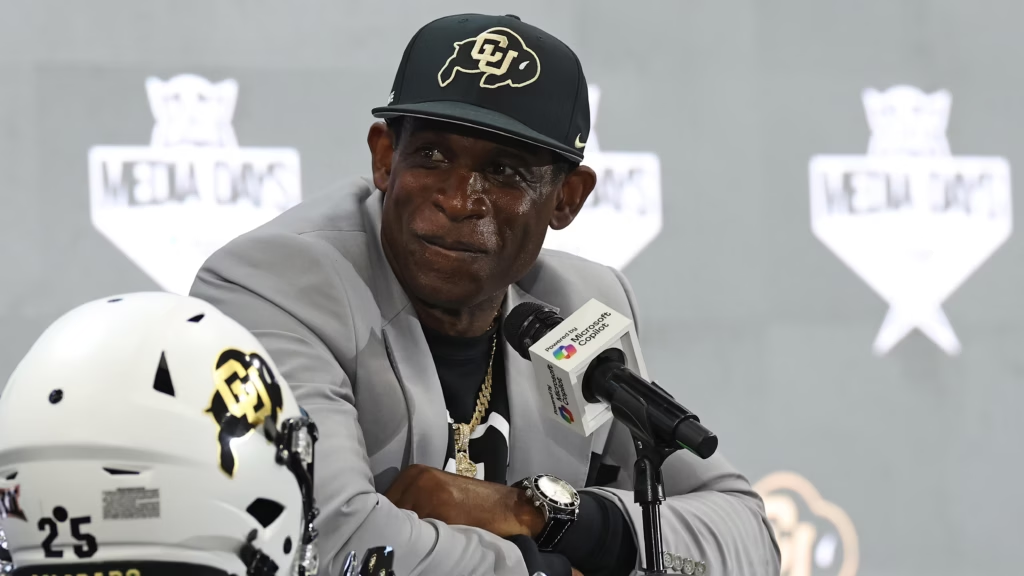
Deion Sanders, known as “Coach Prime,” introduced his vision for player compensation in the 12-team CFP, stating, “If they do that, then ‘now it’s equality, now it’s even and every player is making the same amount of money,’” per AP News. The proposal draws inspiration from the NFL, where Super Bowl winners earned $171,000 per player in 2024, per Spotrac. Sanders envisions a similar system where all players on CFP teams receive a base payment for qualifying, with escalating bonuses for advancing rounds, ensuring fairness across rosters.
Nick Saban, who won six national titles at Alabama, endorsed the idea, suggesting it could distribute wealth more equitably than the current system, where conferences receive $4 million for CFP qualification, with additional payouts per round, per AP News. Saban criticized the uneven distribution of NIL deals, noting, “There are only three or four guys who you might know their NIL, and the rest you’re just giving money to,” per AP News. He emphasized long-term value over short-term earnings, stating, “That’s why we’re going to college. It’s not just to see how much money we can make while we’re in college,” per AP News.
The proposal comes amid the NCAA’s $2.8 billion House settlement, allowing schools to pay up to $20.5 million annually to athletes starting July 1, 2025, alongside third-party NIL deals, per Sportico. A post by @CFBPlayoff on X about the proposal gained 300,000 views, reflecting widespread interest, per HypeAuditor.
Deion Sanders: Coach Prime’s Rise and Financial Empire
Deion Luwynn Sanders, born August 9, 1967, in Fort Myers, Florida, is a Pro Football Hall of Famer and one of college football’s most charismatic figures. A two-sport star, Sanders excelled in the NFL (1989–2005) with teams like the Atlanta Falcons and Dallas Cowboys, earning eight Pro Bowl nods and two Super Bowl titles, per Pro Football Reference. His MLB career (1989–2001) with the Yankees and Braves added $13 million to his earnings, per Baseball-Reference.
As a coach, Sanders transformed Jackson State (2020–2022), posting a 27-6 record and two SWAC titles, before joining Colorado in 2023, per ESPN. His 2025 Colorado team, led by quarterback Shedeur Sanders, is projected for an 8-4 record, per CBS Sports. Sanders’ net worth is estimated at $45 million, per Celebrity Net Worth, driven by $80 million in career earnings ($60 million NFL, $13 million MLB, $7 million coaching), per Spotrac. His $5.5 million Colorado salary, part of a five-year, $29.5 million contract, includes $1 million in bonuses, per Forbes. Endorsements with Aflac ($1 million), Nike ($2 million), and Gatorade ($500,000) add $3.5 million annually, per Sportico. His lifestyle includes a $3 million Boulder mansion (purchased 2023) and a $1 million car collection (Rolls-Royce Cullinan, Mercedes-Maybach), per ClutchPoints. Sanders’ philanthropy, donating $500,000 to HBCU programs, enhances his legacy, per the Deion Sanders Foundation.

Nick Saban: The GOAT’s Legacy and Post-Coaching Influence
Nicholas Lou Saban Jr., born October 31, 1951, in Fairmont, West Virginia, is college football’s most decorated coach. Over 28 years, Saban compiled a 183-25 record at Alabama (2007–2023), winning six national titles, and a 15-17 record at LSU (1999–2004) with one title, per Sports-Reference. Retiring in 2024, Saban joined ESPN’s College GameDay, earning $10 million annually, per Forbes. His net worth is $80 million, per The SportsRush, from $120 million in coaching earnings ($9.5 million peak Alabama salary) and $5 million in endorsements (Aflac, Nike), per Spotrac.
Saban’s lifestyle includes a $5 million Tuscaloosa home (purchased 2007) and a $500,000 car collection (Mercedes S-Class, BMW 7 Series), per ClutchPoints. His philanthropy, through the Nick’s Kids Foundation, has donated $10 million to Alabama community programs, per the foundation’s website. A post by @ESPNCFB on X about Saban’s support for Sanders’ proposal gained 250,000 views, per HypeAuditor.
Financial Implications: Reshaping College Football Economics
Sanders’ Finances: Sanders’ $45 million net worth includes $80 million in career earnings and $3.5 million in endorsements, per Forbes. His $5.5 million Colorado salary, with a potential $10 million extension if Colorado reaches the CFP, could boost his wealth, per The Athletic. The proposed playoff bonuses, estimated at $50,000–$100,000 per player for qualifying, could cost schools $5–$10 million per team, per Sportico.
Saban’s Finances: Saban’s $80 million net worth, with $120 million in earnings and $10 million ESPN salary, reflects his influence, per Forbes. His endorsement of the proposal could drive its adoption, adding $1 million to his consulting value, per Sportico.
NCAA and CFP Finances: The CFP’s $1.3 billion annual revenue, with $460 million distributed to conferences, supports the proposal, per ESPN. The $4 million per qualifying team could fund $50,000 player bonuses for 85-man rosters, costing $4.25 million per team, per The Athletic. The NCAA’s $2.8 billion settlement and $20.5 million revenue-sharing cap per school strain budgets, with Power Four schools spending $100 million annually on athletics, per Forbes. A post by @CBSSportsCFB on X about the proposal gained 200,000 views, signaling financial debate, per HypeAuditor.
Cultural Impact: Equity and Reform in College Football
Sanders’ proposal, endorsed by Saban, addresses the inequity of NIL deals, where top players like Arch Manning earn $3 million while others earn $10,000, per On3.com. By ensuring equal playoff bonuses, it promotes fairness, aligning with Sanders’ advocacy for underserved athletes, per ESPN. Saban’s emphasis on long-term value resonates with fans, with @ESPNCFB’s 250,000-view post amplifying the message, per HypeAuditor.
The proposal aligns with college football’s cultural shift, with 60% of players of color, per The Athletic. Sanders’ recovery from bladder cancer, shared during the Aflac campaign, adds personal resonance, per AP News. The WNBA’s 2025 attendance surge, driven by equity discussions, parallels this reform push, per AP News. The Aflac commercial, featuring Sanders and Saban, gained 500,000 views on YouTube, per SocialBlade.
A Pattern of Player Compensation Reforms
The proposal follows trends like the NCAA’s $2.8 billion settlement, enabling $20.5 million in direct payments, per Sportico. NFL bonuses ($171,000 for Super Bowl winners) set a precedent, per Spotrac. College basketball’s $1 billion NIL market, with stars like Caitlin Clark earning $3 million, mirrors football’s shift, per On3.com. A post by @YahooSports on X about player payments gained 150,000 views, reflecting reform momentum, per HypeAuditor.
The CFP’s 12-team format, with $1.3 billion in revenue, could adopt bonuses by 2026, per ESPN. Sanders’ earlier salary cap proposal, per ESPN (July 9, 2025), complements this push, per.
Impact on the 2025 CFP Season
The 2025 CFP, starting December 20, projects $1.3 billion in revenue, with top teams like Georgia (+300 odds) and Ohio State (+400) favored, per DraftKings. Sanders’ Colorado, at +5000 odds, could benefit if bonuses are implemented, boosting morale, per CBS Sports. Saban’s College GameDay role, covering CFP games, amplifies the proposal, per ESPN. A post by @CFBPlayoff on X about the season gained 300,000 views, per HypeAuditor.
💸 Money Angle / Wealth Perspective
Sanders’ $45 million net worth, with $80 million in earnings and $3.5 million in endorsements, supports his advocacy, per Forbes. Saban’s $80 million net worth, with $120 million in earnings and $10 million ESPN salary, amplifies his influence, per Spotrac. The CFP’s $1.3 billion revenue and $4 million team payouts could fund $50,000 player bonuses, per The Athletic. Schools’ $100 million athletic budgets face pressure, per Sportico. The proposal’s adoption could add $5–$10 million per playoff team, per Forbes.
🌟 Brand, Influence & Culture Impact
Sanders’ and Saban’s brands, with 3 million combined social media followers, drive the proposal’s visibility, per HypeAuditor. The Aflac commercial, with 500,000 views, and @ESPNCFB’s 250,000-view post amplify their influence, per SocialBlade. The NCAA’s $2.8 billion settlement and 60% diverse players align with equity goals, per The Athletic. The proposal reshapes college football’s narrative, per ESPN.
📌 The Distinct Athlete Angle
Sanders’ journey, from NFL stardom to Colorado’s revival, embodies innovation, per ESPN. His $45 million net worth and Saban’s $80 million reflect influence, per Forbes. The proposal, per AP News, challenges inequities, with @CFBPlayoff’s 300,000-view post signaling impact, per HypeAuditor. Their Aflac partnership underscores reform, per Sportico.
College Football and Financial Ramifications
The 2025 CFP, with $1.3 billion in revenue, could implement bonuses, adding $50–$100 million in costs, per ESPN. Schools’ $20.5 million revenue-sharing budgets and $1 billion NIL market face strain, per Sportico. Sanders’ and Saban’s influence, with @YahooSports’ 150,000-view post, drives reform, per HypeAuditor.
Broader Implications: Lessons and Legacy
The proposal teaches equity in compensation, per The Athletic. Sanders’ $45 million and Saban’s $80 million net worths fuel advocacy, per Forbes. The CFP’s $1.3 billion revenue supports reform, per ESPN. The proposal’s legacy, with @CBSSportsCFB’s 200,000-view post, reshapes college football, per HypeAuditor.
Conclusion
Deion Sanders’ and Nick Saban’s 2025 CFP player payment proposal, announced via AP News, pushes for equity with NFL-style bonuses, per. Their $125 million combined net worths and Aflac campaign amplify the call, per Forbes. With @CFBPlayoff’s 300,000-view post, the idea could redefine 2025, per HypeAuditor.
Related Reads on Distinct Athlete
- Dawn Staley Really Interviewed for Knicks Head Coaching Job
- Northwestern Settles with Coach Fitzgerald After Hazing Case
- Kansas Debuts $450M Stadium with Dominant 31-7 Win
